Modelling and numerical simulations of heat and mass transfer in multiphase flow during the release of liquid ammonia from a storage tank through the piping system to the open atmosphere

“Abstract

The aim of this study is to develop a contemporary CFD model of the multiphase flow of ammonia from a bulk liquid part of the storage vessel through the release piping to the atmosphere. The model is validated against the experiment with a 12 m3 tank pressurised to 0.5357 MPa(g), i.e. Test No.4 of 560 s duration conducted by INERIS with release from the liquid bulk. The volume-of-fluid (VOF) method is applied for shared velocity and temperature of liquid and vapour phases of ammonia. The heat and mass transfer between liquid and vapour is simulated by modified Lee’s evaporation-condensation model, accounting for the heat transfer from/to equipment and environment. A unique feature of the model is the phase change mechanism with varying mass transfer rates based on the transient volume fractions of liquid and vapour in a multiphase flow. This allowed to account for computationally unaffordable simulations of changing in time contact surface area between dispersed liquid and gaseous phases and avoid associated numerical complications. The model effectively captures the complex heat and mass transfer phenomena, including the cooling effect of evaporation in the piping and at the nozzle. The value of the time relaxation parameter and a multiplier accounting for the increase of contact surface between liquid and vapour in the pipe flow are defined by the inverse problem method through the comparison of simulations with the experiment. Simulations accurately reproduced experimental pressure and temperature dynamics in the storage tank, piping system and nozzle, and the total released mass of ammonia of 2352 kg.”


Vladimir Molkov, Srinivas Sivaraman, Donatella Cirrone, Benjamin Truchot, Dmitriy Makarov, Modelling and numerical simulations of heat and mass transfer in multiphase flow during the release of liquid ammonia from a storage tank through the piping system to the open atmosphere, International Journal of Heat and Mass Transfer, Volume 246, 2025, 127097, https://doi.org/10.1016/j.ijheatmasstransfer.2025.127097.

The full report is accessible via: https://doi.org/10.1016/j.ijheatmasstransfer.2025.127097


For related publications please see Resources – UK National Clean Maritime Research Hub

Floating solar wireless power transfer system for electric ships: Design and laboratory tests

“Abstract

The maritime industry is under increasing pressure to decarbonise, presenting an important pathway of transforming the power systems from conventional marine fuels to electric-based. This study proposes an innovative solution to support maritime decarbonisation through the integration of a floating solar clean energy harnessing and wireless power transfer (WPT) technology for electric vessels. The paper presents the design and experimental tests of the integrated system specifically, based on a model of an electric yacht. This study provides an in-depth analysis of application of floating solar to provides an off-grid wireless power transfer system that can scale for larger vessels such as ferries. The off-grid modularity proposed enables scalable, flexible, and sustainable energy delivery for maritime applications and decarbonisation with specific attention to challenges in WPT alignment and environmental condition. Simulations using ANSYS Maxwell were performed to model the magnetic field interactions and ascertain the optimal power transfer efficiency. Subsequently, a reduced-scale prototype system was designed, built and tested in a wave tank. The experimental results demonstrated efficient wireless charging with an average efficiency of 82 %, and the docking system proved effective in maintaining alignment even when the ship has wave-induced motions. The findings support the feasibility of using floating solar WPT systems for maritime vessels and pave the way to larger-scale studies.”


Ibrahim, K.A., Le Maréchal, T., Luk, P., Qin, Q., Huang, L., Xie, Y., Verdin, P. and Luo, Z., 2025. Floating solar wireless power transfer system for electric ships: Design and laboratory tests. Energy Conversion and Management332, p.119738. https://doi.org/10.1016/j.enconman.2025.119738

Please use the DOI link above to access the full article.

For related publications please see Resources – UK National Clean Maritime Research Hub
Short-Term Greenhouse Gas Emission Reduction in the Maritime Sector: The Role of Energy Efficiency Measures

This report provides an independent assessment of the methods and technologies with the potential to reduce emissions in the maritime sector, focusing particularly on solutions for improvements in energy efficiency. Energy efficiency should always be prioritised and is a critical pathway for reducing emissions in the near term while more advanced decarbonisation technologies continue to mature.

The report consolidates peer reviewed and grey literature to assess the current state of the art and uptake of GHG abatement options for the maritime sector. Firstly, the report outlines the opportunities, options and the key barriers to maritime decarbonisation. Secondly, the report examines the IMO regulations which aim to incentivize the implementation of energy efficiency measures and technologies to improve energy efficiency of ships. Thirdly, the report explores energy efficiency technologies and practices in detail, introducing each technology, the energy saving potential of the technology, the maturity of the technology and the current deployment of the technology.

This report collates extensive information to provide an overview of maritime decarbonisation including a review of IMO’s initiatives and an analysis of measures to improving energy efficiency in the maritime sector. The report includes over 200 references, with thousands of sources reviewed and processed. Overall, the CII, EEXI and EEDI are key drivers of change, aimed at reducing GHG emissions and pollution from vessels and ports. To support these goals, a wide range of technologies and operational measures are available which have the potential to make significant energy savings.


Suggested Citation:
Williams, R., Haider, J., Heslop, J., & Roskilly, T. (2025). Short-Term Greenhouse Gas Emission Reduction in the Maritime Sector: The Role of Energy Efficiency Measures. UK National Clean Maritime Research Hub. https://doi.org/10.5281/zenodo.18222793

Policy Bulletin 002: Microleaks-No-Burst Safety Technology

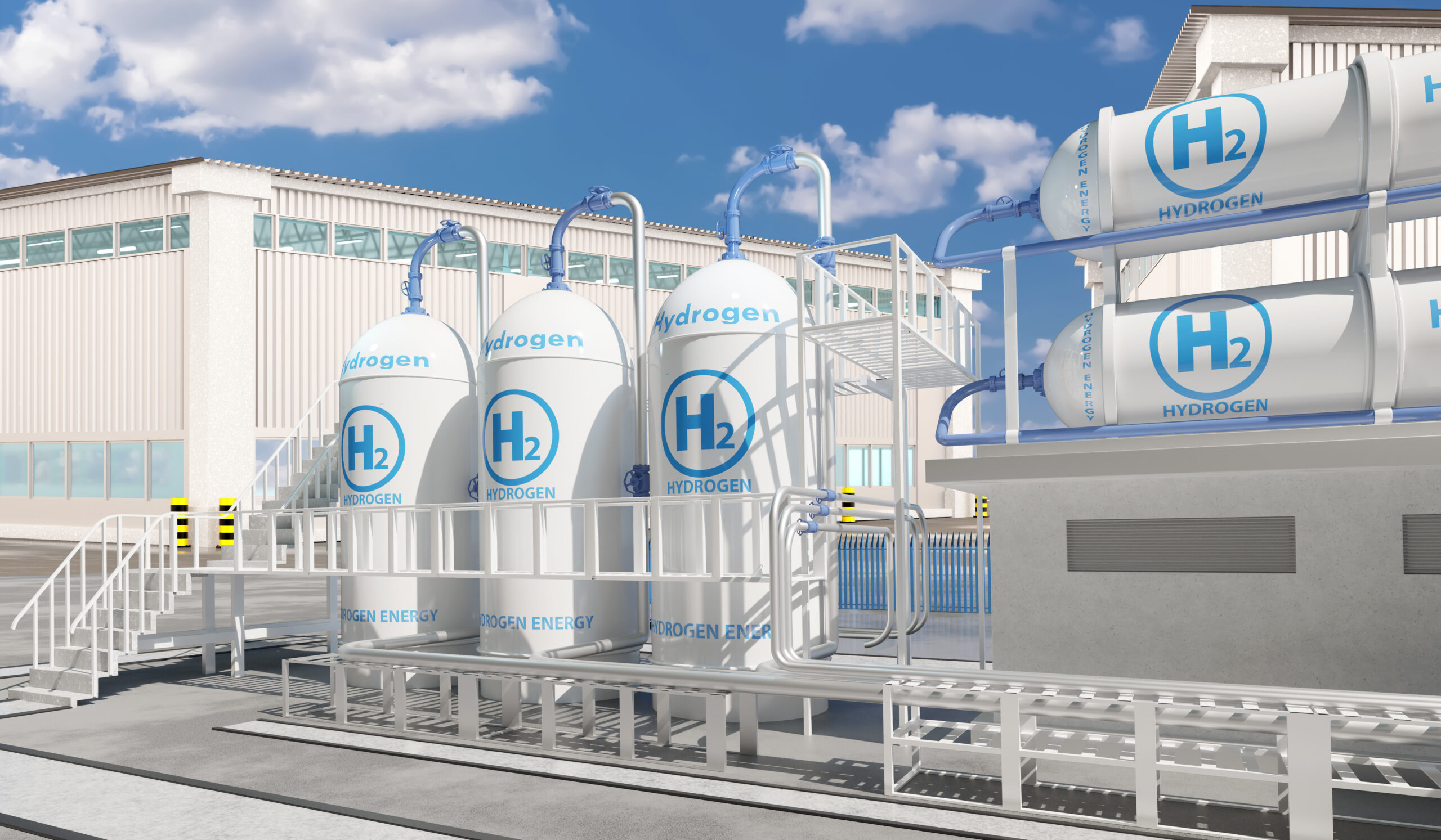
Maritime policy bulletin 002 covers safe hydrogen storage, which will be critical across all transport vectors as well as maritime and in refuelling stations.

This summary of the innovative Microleaks-No-Burst technology for hydrogen storage developed by our researchers Vladimir Molkov, Dmitry Makarov, & Sergii Kashkarov is a solution that would meet stringent safety requirements exceeding that for fossil fuels!

To download the full policy bulletin please click the download button above.

To read more on advancing scale-up of maritime fuels and their safe use please see: Resources – UK National Clean Maritime Research Hub
 

For bulletin 1 please see: Policy Bulletin 001: Eco-ships investment and price differentials – UK National Clean Maritime Research Hub

 

Suggested citation:

Molkov, V., & Copeland, C. L. (2025). Microleaks-No-Burst Safety Technology: Self-venting in a fire for TPRD-less hydrogen storage tanks. UK National Clean Maritime Research Hub. https://doi.org/10.5281/zenodo.20141386

Ammonia Combustion: Internal Combustion Engines and Gas Turbines

“Abstract:

The quest for renewable energy sources has resulted in alternative fuels like ammonia, which offer promising carbon-free fuel for combustion engines. Ammonia has been demonstrated to be a potential fuel for decarbonizing power generator, marine, and heavy-duty transport sectors. Ammonia’s infrastructure for transportation has been established due to its widespread primary use in the agriculture sector. Ammonia has the potential to serve as a zero-carbon alternative fuel for internal combustion engines and gas turbines, given successful carbon-free synthesis and necessary modifications to legacy heat engines. While its storage characteristics surpass those of hydrogen, the intrinsic properties of ammonia pose challenges in ignition, flame propagation, and the emissions of nitrogen oxides (NOx) and nitrous oxide (N2O) during combustion in heat engines. Recent noteworthy efforts in academia and industry have been dedicated to developing innovative combustion strategies and enabling technologies for heat engines, aiming to enhance efficiency, fuel economy, and emissions. This paper provides an overview of the latest advancements in the combustion of neat or high-percentage ammonia, offering perspectives on the most promising technical solutions for gas turbines, spark ignition, and compression ignition engines.”


Eyisse, E.F., Nadimi, E. and Wu, D. (2024) ‘Ammonia combustion: Internal combustion engines and Gas Turbines’, Energies, 18(1), p. 29. doi:10.3390/en18010029.

The full report is accessible via: https://doi.org/10.3390/en18010029


For related publications please see Resources – UK National Clean Maritime Research Hub

Liquid hydrogen refuelling at HRS: Description of sLH2 concept, modelling approach and results of numerical simulations

“Abstract

The paper considers the concept of efficient liquid hydrogen (LH2) refuelling at hydrogen refuelling stations (HRS), presents modelling approach and 3D transient CFD simulation results. The concept is based on the advantages of transforming hydrogen from equilibrium to a non-equilibrium sub-cooled state (sLH2) during compression at pump. The modelling approach comprises a thermodynamic model of LH2 transfer from the HRS tank to the pump exit and a two-phase CFD model from the pump exit through the HRS equipment, i.e. pipes with bends, automatic valve, breakaway, nozzle, and manifold to onboard storage tanks. Due to the absence of published experimental data, the modelling approach and simulations are verified against conceptual LH2 refuelling process available in the literature. The CFD model reproduces key LH2 refuelling parameters: flow rate, pressure, temperature dynamics, including non-uniform temperature in onboard tanks and predicts pipe cooldown from 88K to allowable temperatures corridor of 23.9–26.5 K.”


Molkov V, Ebne-Abbasi H, Makarov D. Liquid hydrogen refuelling at HRS: Description of sLH2 concept, modelling approach and results of numerical simulations. International Journal of Hydrogen Energy 2024;93:285–96.

The full report is accessible via: https://doi.org/10.1016/j.ijhydene.2024.10.392


For related publications please see Resources – UK National Clean Maritime Research Hub

Parameter sensitivity analysis for diesel spray penetration prediction based on GA-BP neural network

“Abstract

Machine learning has started to be used in engine research to optimize combustion and predict fuel spray characteristics. This paper presents the development of a machine learning model using a Genetic Algorithm-Backpropagation (GA-BP) neural network to predict spray penetration. The GA-BP neural network was selected for its ability to optimize neural network weights and thresholds, thereby improving model convergence and avoiding local minima, which are common challenges in complex, non-linear problems such as spray prediction. The model was trained using experimental data from diesel injector spray tests, and its accuracy was evaluated through parametric sensitivity analysis, examining the influence of various input factors. A comparison between the machine learning model and the traditional empirical formulas of spray penetration revealed that the machine learning model achieved greater accuracy. In terms of the sensitivity to inputs, it is interesting to find that the cognition of machines is different from that of humans. When an input parameter does not have any functional relationship with other input parameters, the absence of this input parameter will lead to a significant decrease in the accuracy of the output result. The results demonstrate that the machine learning approach offers higher accuracy and better generalizability compared to traditional empirical methods. This study recommends the ways to get better results of penetration prediction with BP neural networks, which is efficient in training and utilizing Artificial Neural Networks (ANNs).”


Zhang, Y. et al. (2024) ‘Parameter sensitivity analysis for diesel spray penetration prediction based on Ga-BP Neural Network’, Energy and AI, 18, p. 100443.

The full report is accessible via: https://doi.org/10.1016/j.egyai.2024.100443


For related publications please see Resources – UK National Clean Maritime Research Hub
Modelling of refuelling through the entire equipment of HRS: use of dynamic mesh to simulate heat and mass transfer during throttling at PCV

“Abstract

Hydrogen refuelling is imperative for the emerging market of hydrogen vehicles. The pressure control valve (PCV) at the hydrogen refuelling station (HRS) plays a major role in ensuring that hydrogen delivery to the vehicle follows the prescribed refuelling protocols. A three-dimensional CFD model with a detailed resolution of PCV motion affecting heat and mass transfer is developed. The PCV motion controlling the mass flow rate is simulated using dynamic mesh. The CFD model captures refuelling from high-pressure tanks through entire HRS equipment to onboard tanks, capturing pressure and temperature changes upstream and downstream of the PCV. The Joule-Thomson effect resulting in a hydrogen temperature increase at PCV is captured using the NIST real gas database. The model is validated against Test No.1 of NREL on refuelling through the entire equipment of HRS. The CFD model can be used to design HRS equipment parameters, including PCV, and develop efficient refuelling protocols.”


Ebne-Abbasi, H., Makarov, D.  and Molkov, V. (2024) ‘Modelling of refuelling through the entire equipment of HRS: use of dynamic mesh to simulate heat and mass transfer during throttling at PCV’, Hydrogen Safety, 1(1), pp. 12–32.

The full report is accessible via: https://doi.org/10.58895/hysafe.4

Cryogenic energy assisted power generation utilizing low flammability refrigerants

“Abstract

Cryogenic carbon-neutral fuels are potential alternatives as future marine fuels, releasing waste cryogenic energy during regasification and waste thermal energy during combustion. Organic Rankine Cycles (ORCs), using flammable hydrocarbon working fluids, are the preferred waste energy reutilization technology, prioritized over Brayton and Kaline cycles due to their compact system configuration. However, hydrocarbon flammability and explosiveness poses a huge safety risk. Therein lies the novelty of this study which presents an advanced dynamic model of a cryogenic enhanced ORC utilizing low flammability hydrofluorocarbons as working fluids for simultaneous reutilization of waste thermal and cryogenic energy from carbon-neutral cryogenic fuels. The evaporation temperature exhibits a direct correlation with energy and an inverse correlation with the exergy performance. System overcharging leads to a drastic performance decline, while undercharging can be tolerated to a certain liquid-to-volume ratio until critical failure. Marine classification societies’ recommendations-based scenarios were employed to gauge the emission reduction potential of low flammability working fluids for cryogenic ORCs, pitted against traditional combustion technologies. A maximum specific net-work, thermal efficiency, exergy efficiency, and cryogenic energy efficiency of 45.64 kJ/kg, 10.43 %, 12.75 %, and 11.8 % was achieved, respectively, with 85 % reduction in GHG emissions, using R452B as the working fluid.”
Farrukh S., Wu D., Taskin A., Dearn K. Cryogenic energy assisted power generation utilizing low flammability refrigerants (2024) Energy, 307, art. no. 132770. DOI: 10.1016/j.energy.2024.132770

The full report is accessible via:https://doi.org/10.1016/j.energy.2024.132770

Numerical study of the spark ignition of hydrogen-air mixtures at ambient and cryogenic temperature

“Abstract

An accurate determination of minimum ignition energy (MIE) is essential for assessing electrostatic hazards and characterising potential for occurrence of combustion in flammable mixtures. This is of utmost importance for hydrogen-air mixtures characterised by a MIE equal to 0.017 mJ, whereas conventional flammable gases are characterised by MIE typically higher than 0.1 mJ. The study aims at developing and validating a CFD three-dimensional model capable to simulate complex unsteady physical and chemical phenomena underlying capacitive discharge spark. The model accounts for the experimental apparatus details, including the effect of electrodes’ gap and associated heat losses. The numerical approach accurately reproduced the experimental measurements of MIE for mixtures of hydrogen with air at initial temperature ranging from ambient (T = 288 K) to cryogenic (T = 123 K). Hydrogen concentration in air was included in the range 10–55% for tests at T = 288 K, and 20–60% for tests at T = 173 K and 123 K respectively. Simulations assess the impact of experimental characteristics and design, such as the electrodes’ dimension, and numerical features on process dynamics, growth of the flame kernel and MIE predictions.”


Cirrone, D. et al. (2024) ‘Numerical Study of the spark ignition of hydrogen-air mixtures at ambient and cryogenic temperature’, International Journal of Hydrogen Energy, 79, pp. 353–363. doi:10.1016/j.ijhydene.2024.06.362.

The full report is accessible via: https://doi.org/10.1016/j.ijhydene.2024.06.362