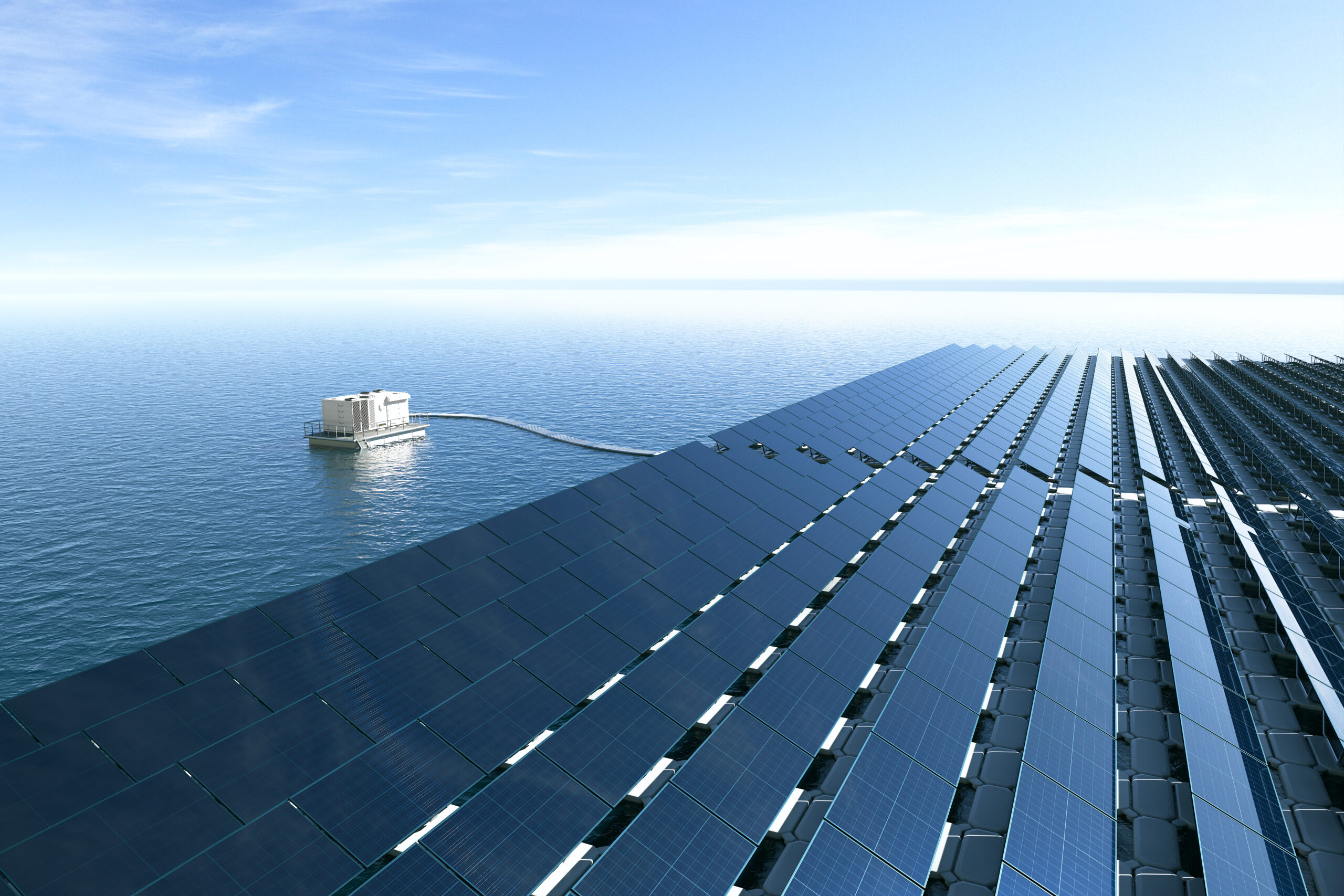
Policy Bulletin 009: Floating Solar Power for Maritime Decarbonisation
Decarbonisation at seaports is constrained by limited land availability, grid capacity, and infrastructure. This bulletin summarises research assessing the potential for floating solar power (FSP) systems to provide renewable electricity for port operations and vessel charging.
Some key findings from installing FSP systems at seaports:
- Can reduce reliance on grid electricity and fossil-based fuels
- Lower energy storage requirements and improve system efficiency, supporting more stable energy supply
- Payback periods are relatively short c.3–4 years under favourable conditions
- Emissions reductions are significant compared to conventional diesel-based energy systems (on a whole life cycle basis)
- With wireless charging infrastructure FSP provides a scalable pathway to electrifying vessels, particularly ferries and short-sea shipping.
Overall, floating solar can provide a viable, port-based renewable energy solution, contributing to maritime decarbonisation while overcoming land and infrastructure constraints.
Policy Recommendations:
Financial support and policy mechanisms can accelerate the adoption of FSP technologies, wider electrification of the maritime sector and contribute to the UK’s net zero emissions target.
This bulletin is based on a publication by Qing Qin, Lukman Adeboye, Khalifa Aliyu Ibrahim, Patrick Luk, Ying Xie, Patrick Verdin, Zhenhua Luo, Luofeng Huang titled “Techno-economic and environmental assessment of floating solar power with innovative charging systems for decarbonizing maritime operations in the UK“.
Recommended citation:
Xie, Y.& Copeland, C. L. (2026). Floating Solar Power for Maritime Decarbonisation. UK National Clean Maritime Research Hub. https://doi.org/10.5281/zenodo.21469561
To download the full policy bulletin, please click the download button above.
To read other bulletins, please see: Resources – UK National Clean Maritime Research Hub