Modelling environmental life cycle performance of alternative marine power configurations with an integrated experimental assessment approach: A case study of an inland passenger barge

“Abstract

There is pressure on the global shipping industry to move towards greener propulsion and fuel technologies to reduce greenhouse gas emissions. Hydrogen and electricity are both recognised as pathways to achieve a net-zero. However, in the evaluation of the environmental performance of these alternative marine power configurations, conventional life cycle assessment (LCA) methods have limitations reflecting the varied nature of ship design and operational modes. The integration of LCA with experimental assessment could remedy the shortcoming of conventional approaches to data generation. The system energy demand data in this study was generated based on specific ship design and directly fed into life cycle assessment. To demonstrate the effectiveness and potential the approach was applied to a case study of inland waterway vessel. Suitable hybrid PV/electricity/diesel and hydrogen powered fuel cell systems for the case vessel were modelled; and hydrodynamic testing and dynamic system simulation was undertaken to provide ship performance data under various operational/environmental profiles. Lifecycle assessment (LCA) indicated hydrogen and electrical propulsion technologies have the potential for 85.7 % and 56.2 % emissions reduction against an MGO base case, respectively. The results highlight that implementation of both technologies is highly dependent on energy production pathways. Hydrogen systems reliant on fossil feedstocks risk an increase in emissions of up to 6.3 % against the MGO base case. Sensitivity analysis indicated an electrical system with electricity production from 79.5 % renewables could achieve savings of 82.2 % in GHG emissions compared to the MGO base case. Crucially, the results demonstrate a further development of the LCA approach which can enable a more accurate environmental performance evaluation of alternative marine power configurations considering specific ship design and operational characteristics. Ultimately this addition makes the results more meaningful for commercial operations and decision making in the selection of alternative marine power systems to support the transition to net-zero.”


Wang, Y. et al. (2024) ‘Modelling Environmental Life Cycle Performance of Alternative Marine Power Configurations with an Integrated Experimental Assessment Approach: A case study of an inland passenger barge’, Science of The Total Environment, 947, p. 173661. doi:10.1016/j.scitotenv.2024.173661.

Please use the DOI link above to access the full report.

For related publications please see Resources – UK National Clean Maritime Research Hub
Breakthrough safety technology of explosion free in fire self-venting (TPRD-less) tanks: The concept and validation of the microleaks-no-burst technology for carbon-carbon and carbon-glass double-composite wall hydrogen storage systems

Abstract

The paper describes the breakthrough microleaks-no-burst (μLNB) safety technology of explosion free in fire self-venting hydrogen tanks that do not require thermally-activate pressure relief devices (TPRD). The technology implies melting of the hydrogen-tight liner before hydrogen-leaky double-composite wall loses its load-bearing ability. Hydrogen then flows through the wall’s microchannels and either burns in microflames on its own or together with resin. The experimental validation of the technology is presented for 7 prototypes with the nominal working pressure of 70 MPa made of carbon-carbon or carbon-glass composites. The prototypes are fire tested at the specific heat release rate HRR/A = 1 MW/m2 characteristic for gasoline/diesel spill fires. The μLNB technology eliminates catastrophic consequences of tank rupture in fire: blast waves, fireballs, and projectiles. The technology limits hydrogen accumulation in naturally ventilated enclosures. It reduces the risk of hydrogen-powered vehicles to an acceptable level below that for fossil fuel automobiles, including underground parking and tunnels. It provides an unprecedented level of life safety and property protection.”

Molkov V, Kashkarov S, Makarov D. Breakthrough safety technology of explosion free in fire self-venting (TPRD-less) tanks: The concept and validation of the microleaks-no-burst technology for carbon-carbon and carbon-glass double-composite wall hydrogen storage systems. International Journal of Hydrogen Energy, Volume 48, Issue 86, 22 October 2023, Pages 33774-33785.

The full publication is accessible via: https://www.sciencedirect.com/science/article/pii/S0360319923024448

Comparative analysis of CFD models to simulate temperature non-uniformity during hydrogen tank refuelling

“Abstract

This study compares four computational fluid dynamics (CFD) models, i.e. k-ε, RSM, SAS, and LES, to simulate temperature non-uniformity during hydrogen tank refuelling. Three grids with a total number of control volumes of 64k, 363k, and 2.9 M were used. The maximum dimensionless wall distances, y+, were 80, 5 and 2.5, respectively. The predictive capability of the models was assessed by recommended statistical indicators using ten thermocouple locations during 620 s of the experiment. The comparative analysis demonstrated a better predictive capability of temperature non-uniformity and stratification by the LES model and a shorter simulation time. It is concluded that meshes with y+ larger than 80 would overpredict the average hydrogen temperature while meshes with y+<5 provide a good simulation accuracy. The results underline the importance of the turbulence model choice and the numerical grid resolution for proper prediction of temperature non-uniformity during hydrogen tank refuelling.”


Xie, H. et al. (2024) ‘Comparative analysis of CFD models to simulate temperature non-uniformity during hydrogen tank refuelling’, International Journal of Hydrogen Energy, 70, pp. 715–728. doi:10.1016/j.ijhydene.2024.05.047.

The full report is accessible via: doi:10.1016/j.ijhydene.2024.05.047

Research and innovation identified to decarbonise the maritime sector

“Abstract

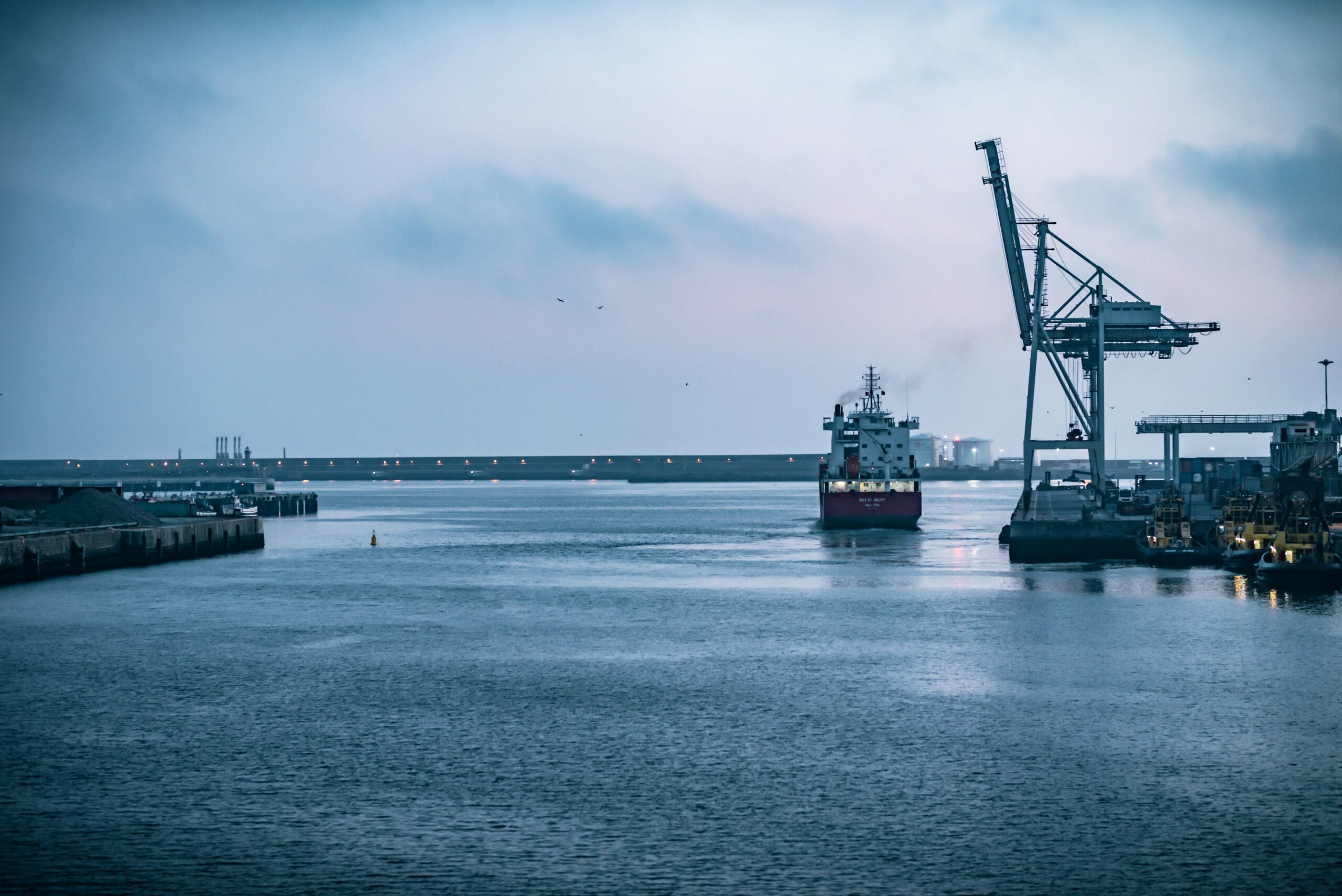
The maritime sector requires technically, environmentally, socially, and economically informed pathways to decarbonise and eliminate all emissions harmful to the environment and health. This is extremely challenging and complex, and a wide range of technologies and solutions are currently being explored. However, it is important to assess the state-of-the-art and identify further research and innovation required to accelerate decarbonisation. The UK National Clean Maritime Research Hub have identified key priority areas to drive this process, with particular focus on marine fuels, power and propulsion, vessel efficiency, port operations and infrastructure, digitalisation, finance, regulation, and policy.”
 

Ling-Chin J, Simpson R, Cairns A, Wu D, Xie Y, Song D, Kashkarov S, Molkov V, Moutzouris I, Wright L, Tricoli P, Dansoh C, Panesar A, Chong K, Liu P, Roy D, Wang Y, Smallbone A, Roskilly AP. Research and innovation identified to decarbonise the maritime sector. Green Energy Sustain. 2024;4(1):0001. https://doi.org/10.47248/ges2404010001

The full publication is available via: https://doi.org/10.47248/ges2404010001 

Flash boiling and pressure recovery phenomenon during venting from liquid ammonia tank ullage

“Abstract:


Liquid ammonia stored at elevated pressures undergoes phase change during tank venting. The paper describes a CFD model able to reproduce the INERIS experiment performed using 12 m3 volume tank when 300 kg of ammonia were vented during 460 s from the ullage through the pipe to the atmosphere. The model is based on the volume-of-fluid method combined with Lee’s model for mass transfer between phases. Extensive calibration trials were conducted to examine the impact of surrounding temperature conditions. It allowed to establish the range of time relaxation parameter values of Lee evaporation-condensation model specific for liquid ammonia tank venting. Simulations reproduced accurately the experimentally measured final pressure in the tank and the amount of ammonia released during venting. Liquid ammonia boiling is triggered by reduction of pressure and takes place throughout the liquid causing the pressure recovery phenomenon. Numerical simulations demonstrated that pressure recovery phenomenon is driven by the characteristic time delay associated with the rise of vapour bubbles generated by flash boiling and the subsequent release of evaporated ammonia into the tank ullage space. The developed CFD model can be used as a contemporary tool for safety engineering and development of tank management strategies for liquid ammonia storage.”


Sivaraman, S., Makarov, D. and Molkov, V. Flash boiling and pressure recovery phenomenon during venting from liquid ammonia tank ullage. Process Safety and Environmental Protection, 2024;182: 880-893. https://doi.org/10.1016/j.psep.2023.12.037

The full report is accessible via: https://doi.org/10.3390/su16041620 

CFD model of refuelling through the entire equipment of a hydrogen refuelling station

Abstract:

This paper aims at the development and validation of a computational fluid dynamic (CFD) model for simulations of the refuelling process through the entire equipment of the hydrogen refuelling station (HRS). The absence of such models hinders the design of inherently safer refuelling protocols for an arbitrary combination of HRS equipment, hydrogen storage parameters, and environmental conditions. The CFD model is validated against the complete process of refuelling lasting 195s in Test No.1 performed by the National Renewable Energy Laboratory (NREL). The test equipment includes high-pressure tanks of HRS, pressure control valve (PCV), valves, pipes, breakaway, hose, and nozzle all the way up to three onboard tanks. The model accurately reproduced hydrogen temperature and pressure through the entire line of HRS equipment. A standout feature of the CFD model, distinguishing it from simplified models, is the capability to predict temperature non-uniformity in onboard tanks, a crucial factor with significant safety implications.”

Ebne-Abbasi, H., Makarov, D. and Molkov, V. CFD model of refuelling through the entire equipment of a hydrogen refuelling station, International Journal of Hydrogen Energy, 2023;53:200–207. https://doi.org/10.1016/j.ijhydene.2023.12.056.


Full publication accessible via: https://doi.org/10.1016/j.ijhydene.2023.12.056

CFD Simulations of Hydrogen Tank Fuelling: Sensitivity to Turbulence Model and Grid Resolution

“Abstract:
CFD modelling of compressed hydrogen fuelling provides information on the hydrogen and tank structure temperature dynamics required for onboard storage tank design and fuelling protocol development. This study compares five turbulence models to develop a strategy for cost-effective CFD simulations of hydrogen fuelling while maintaining a simulation accuracy acceptable for engineering analysis: RANS models k-ε and RSM; hybrid models SAS and DES; and LES model. Simulations were validated against the fuelling experiment of a Type IV 29 L tank available in the literature. For RANS with wall functions and blended models with near-wall treatment, the simulated average hydrogen temperatures deviated from the experiment by 1–3% with CFL ≈ 1–3 and dimensionless wall distance y+ ≈ 50–500 in the tank. To provide a similar simulation accuracy, the LES modelling approach with near-wall treatment requires mesh with wall distance y+ ≈ 2–10 and demonstrates the best-resolved flow field with larger velocity and temperature gradients. LES simulation on this mesh, however, implies a ca. 60 times longer CPU time compared to the RANS modelling approach and 9 times longer compared to the hybrid models due to the time step limit enforced by the CFL ≈ 1.0 criteria. In all cases, the simulated pressure histories and inlet mass flow rates have a difference within 1% while the average heat fluxes and maximum hydrogen temperature show a difference within 10%. Compared to LES, the k-ε model tends to underestimate and DES tends to overestimate the temperature gradient inside the tank. The results of RSM and SAS are close to those of LES albeit of 8–9 times faster simulations.”


Xie H, Makarov D, Kashkarov S, Molkov V. CFD Simulations of hydrogen tank fuelling: sensitivity to turbulence model and grid resolution. Hydrogen, 2023;4:1001–21. https://doi.org/10.3390/hydrogen4040058

Full publication accessible via: https://doi.org/10.3390/hydrogen4040058


For related publications please see Resources – UK National Clean Maritime Research Hub

Safety of Liquid and Cryo-compressed Hydrogen: Overview of Physical and CFD Models Developed at Ulster University

“Abstract

Transport and storage of liquid hydrogen (LH2) is currently the most attractive option for scaling up the hydrogen supply infrastructure. Hazards and associated risks for compressed gaseous hydrogen applications are relatively well investigated, yet there is less understanding of the hazards and associated risks for cryogenic hydrogen, including LH2. Validated models and tools are needed for hydrogen safety engineering of LH2 systems and infrastructure. This paper presents an overview of models developed and validated at HySAFER Centre of Ulster University, including within the PRESLHY project. These include models for assessment of hazard distances for incident scenarios. Experimental data have been used to validate the contemporary CFD models and build new correlations or reduced models. The analysed phenomena and relevant models are generally separated into three main pillars to assess consequences of incidents involving hydrogen: release and dispersion, ignition, and combustion. The developed and presented models are interconnected and can be used synergistically to provide a unified approach to the assessment of consequences of selected incident scenarios with LH2 starting from an initiating event. The models and tools aim to inform and underpin relevant Regulations Codes and Standards and assist stakeholders in performing hydrogen safety engineering.”


Cirrone D, Makarov D, Molkov V. Safety of liquid and cryo-compressed hydrogen: overview of physical and CFD models developed at Ulster University. Chemical Engineering Transactions, 2023, 105, 55–60. https://doi.org/10.3303/CET23105010.

The full report is accessible via: Safety of Liquid and Cryo-compressed Hydrogen: Overview of Physical and CFD Models Developed at Ulster University | Chemical Engineering Transactions (cetjournal.it)

Pathways to Decarbonization of Deep-Sea Shipping: An Aframax Case Study

“Abstract

Deep-sea decarbonization remains an enigma as the world scrambles to reduce global emissions. This study looks at near-term decarbonization solutions for deep-sea shipping. Pathways are defined, which are appealing to ship owners and major world economies alike. The economic and environmental viability of several of the most advanced near-term technologies for deep-sea decarbonization are revealed. The environmental analysis suggests the necessity of new emission intensity metrics. The economic analysis indicates that the carbon tax could be a great motivator to invest in decarbonization technologies. Standalone decarbonization technologies can provide a maximum of 20% emissions reduction. Hence, to meet IMO 2050 targets of 50% emissions reduction, several solutions need to be utilized in tandem. This study reaches the conclusion that alternative fuels are the crucial step to achieve a net zero carbon economy, although bunkering, infrastructure, and economic hurdles need to be overcome for the widespread implementation of carbon-neutral fuels.”


Pathways to Decarbonization of Deep-Sea Shipping: An Aframax Case Study. S Farrukh, M Li, GD Kouris, D Wu, K Dearn, Z Yerasimou, P Diamantis, Energies 16, 7640. 2023.

The full report is accessible via: https://doi.org/10.3390/en16227640

Explosion free in fire self-venting (TPRD-less) Type IV tanks: Validation under extreme impinging 70 MPa hydrogen jet fire conditions

Abstract:

High-pressure hydrogen jet fire from a storage tank impinging another tank located nearby is a worst-case incident scenario. This could result in storage vessel rupture with catastrophic consequences implying life and property loss. The concept of microleaks-no-burst (μLNB) performance of hydrogen storage tanks of Type IV is explained. In this study, the breakthrough safety technology of explosion free in fire self-venting (TPRD-less) tank with nominal working pressure (NWP) of 70 MPa is validated again st the most extreme fire conditions of an impinging hydrogen jet from 70 MPa tank. The results of the successful performance of self-venting tank in momentum-dominated hydrogen impinging jet fire are analysed. This work expands further the experimental validation domain of the explosion free in fire self-venting tanks to scenario of impinging fire of the highest applied intensity of HRR/A = 19.5 MW/m2.”


Molkov V, Kashkarov S, Makarov D. Explosion free in fire self-venting (TPRD-less) Type IV tanks: Validation under extreme impinging 70 MPa hydrogen jet fire conditions. International Journal of Hydrogen Energy, Volume 48, Issue 100, 30 December 2023, Pages 40117-40126. https://doi.org/10.1016/j.ijhydene.2023.09.020

Publication accessible via: https://doi.org/10.1016/j.ijhydene.2023.09.020