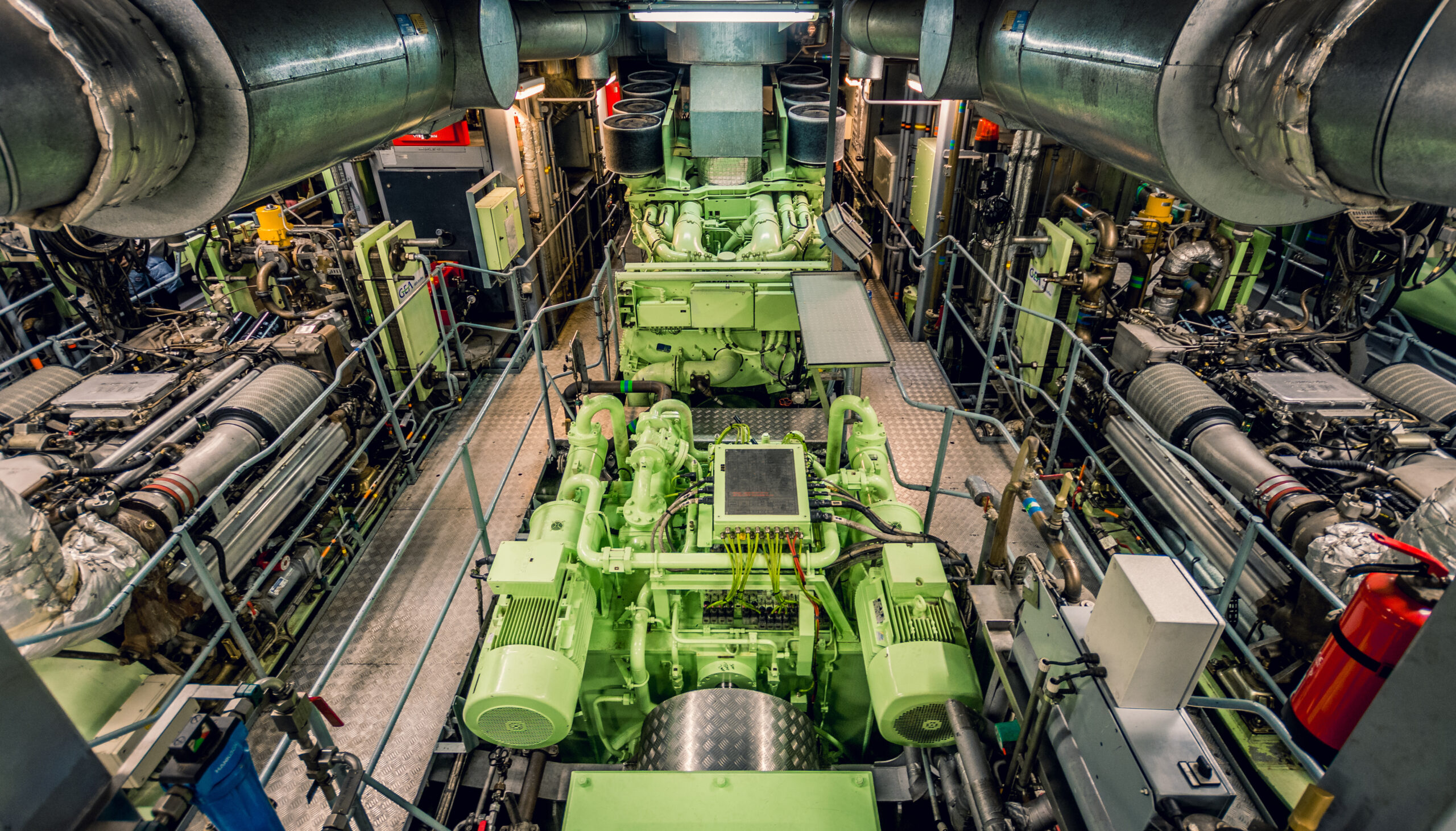
Split cycle engine experiments and modelling with port hydrogen for sustainable propulsion
“Abstract
Decarbonising the heavy-duty sector requires concepts that surpass the diesel cycle in efficiency while meeting increasingly stringent emissions standards. The recuperated split-cycle engine (RSCE) offers a potential pathway, combining quasi-isothermal compression (enabled with secondary working fluids, SWF) with internal exhaust heat recuperation. This work assesses hydrogen-diesel dual fuelling using single-cylinder RSCE experiments at a range of loads, supported by a validated Chemkin-Pro framework. The modelling extended the analysis using a reactor network and multizone model to evaluate high-load conditions, pre-ignition mixing and SWF carry-over. Experiments show stable dual-fuel operation, with light and controllable pre-ignition linked to elevated HO2/H2O2/OH radicals. Model predictions at higher load indicate that, relative to a neat diesel baseline, BMEP is predicted to be maintained, with BSFC and CO2 reduced by 33% and 43% at 10%Vol H2. NOx is predicted to decrease by 23% at 5%Vol H2, but to increase by 42% at 10%Vol H2, as the H2 energy share approaches 40%, consistent with faster premixed heat release and elevated O/OH driving thermal-NO. With efficient aftertreatment conversion, the 5%Vol case is predicted to meet 0.2 g/kWh NOx, whilst 10%Vol remains within the 0.26 g/kWh on-road benchmark. Furthermore, the model predicts that adding H2O to the charge (SWF carry-over) could reduce NOx by 30% at 0.10% H2O with a 3% BMEP penalty alongside an increase in HC due to temperature-limited oxidation. This combined experimental demonstration of expander port-injected H2 in an RSCE, supported by a physically informed spatially resolved multizone modelling framework, supports the combustion feasibility for hydrogen-diesel dual fuelling and identifies the calibration and hardware levers required to achieve practical impact for Euro 7-class NOx alongside EU CO2 reductions. Overall, these results position RSCE + H2 as a potential mid-term route towards sustainable heavy-duty propulsion.”
Panesar, A. and Wylie, E. (2026). Split cycle engine experiments and modelling with port hydrogen for sustainable propulsion. International journal of engine research. doi:10.1177/14680874261461065.
The full article is accessible via:
https://doi.org/10.1177/14680874261461065
For related publications please see Resources – UK National Clean Maritime Research Hub