Modelling and analyzing the stacking strategies in automated container terminals

“Abstract

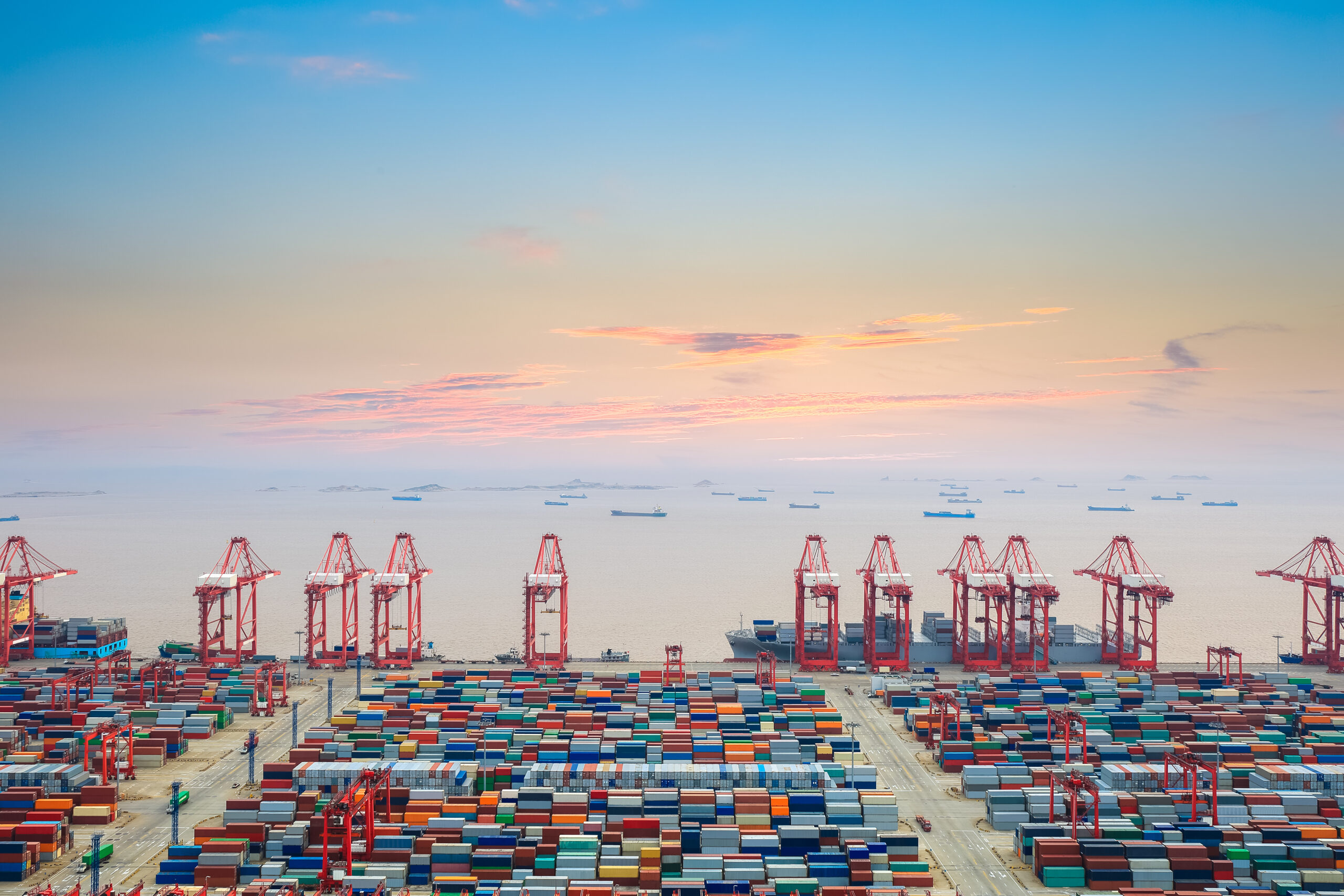
Stacking strategies determine which yard block to allocate the container and which bay and column in the block to stack the container. They play an important role to ensure yard efficiency and reduce vessel berthing time and truck waiting time. This paper models and analyses the impact of stacking strategies on the container terminal operations by a two-stage approach. We consider common stacking rules including random stacking rule and distance-based priority assigning rule. In the first stage, the individual operations of handling equipment are modelled by travel time models considering uncertainty in operations. The effects of stacking rules on individual operations, such as Automatic Guided Vehicle (AGV) traveling times, landside yard crane operation times and seaside yard crane operation times, are estimated. In the second stage, we use a semi-open queuing network to model the interactions between individual operations, and the results of the first stage are used as inputs in the second stage network. We analytically examined the handling times of the relevant equipment under different stacking strategies and their sensitivity to yard density. Finally, we use simulation method to verify the effectiveness of the results of our model. The results can offer insights into which stacking strategies are more suitable under different criteria and circumstances such as balancing workload, increasing yard utilization and reducing congestion for external trucks.”

Zhang, X., Jia, N., Song, DP., & Liu, B. (2024). Modelling and analyzing the stacking strategies in automated container terminals. Transportation Research Part E: Logistics and Transportation Review, 187, 103608. DOI: 10.1016/j.tre.2024.103608

Please use the DOI link above to access the full report.

For related publications please see Resources – UK National Clean Maritime Research Hub

Research and innovation identified to decarbonise the maritime sector

“Abstract

The maritime sector requires technically, environmentally, socially, and economically informed pathways to decarbonise and eliminate all emissions harmful to the environment and health. This is extremely challenging and complex, and a wide range of technologies and solutions are currently being explored. However, it is important to assess the state-of-the-art and identify further research and innovation required to accelerate decarbonisation. The UK National Clean Maritime Research Hub have identified key priority areas to drive this process, with particular focus on marine fuels, power and propulsion, vessel efficiency, port operations and infrastructure, digitalisation, finance, regulation, and policy.”


Ling-Chin J, Simpson R, Cairns A, Wu D, Xie Y, Song D, Kashkarov S, Molkov V, Moutzouris I, Wright L, Tricoli P, Dansoh C, Panesar A, Chong K, Liu P, Roy D, Wang Y, Smallbone A, Roskilly AP. Research and innovation identified to decarbonise the maritime sector. Green Energy Sustain. 2024;4(1):0001. https://doi.org/10.47248/ges2404010001

The full publication is available via: https://doi.org/10.47248/ges2404010001 

A Literature Review of Seaport Decarbonisation: Solution Measures and Roadmap to Net Zero

“Abstract

This paper provides a comprehensive review of the literature related to seaport decarbonisation by combining the academic literature with case studies, industrial reports, newsletters, and domain knowledge. Through the literature review, the emission sources at seaports are categorised according to different criteria for better understanding. One of the criteria is the geographic location, which divides the emission sources into four categories. For each emission source category, the emission reduction measures in the literature are categorised into six structured categories including operational measures, technical measures, fuel and energy measures, infrastructural measures, digitalisation measures, and policy and collaboration measures. The first three categories have a direct impact on emission reductions, whereas the last three categories tend to support and facilitate the development and implementation of the first three categories. Representative case studies are selected from the UK ports to discuss their decarbonisation practices and pathways to net zero. We then propose a generic time-phased roadmap for port decarbonisation towards net zero, which divides the solution measures in each category into three phases to show their progressive processes. We explain the dependence relationships of the solution measures in the roadmap and discuss the challenges and opportunities in the implementation of the roadmap. This paper could offer strategic guidelines to port-associated stakeholders to implement emission reduction strategies and transition to net zero from the system perspective.”


Song, D.-P. (2024) ‘A literature review of seaport decarbonisation: Solution measures and roadmap to net zero’, Sustainability, 16(4), p. 1620. doi:10.3390/su16041620.

The full report is accessible via: https://doi.org/10.3390/su16041620


For related publications please see Resources – UK National Clean Maritime Research Hub

EMERGING RISKS IN MARINE DECARBONISATION: Time to set sail

Authored by Andrew Mackenzie FCII (Marine Claims Adjuster), and co-authored by Bayes Business School academics Dr Cormac Bryce and Dr Ioannis Moutzouris (a member of the UK National Clean Maritime Research Hub Consortium, and theme lead for advances in maritime operations, exploitation of digitalisation and green finance), this whitepaper provides an overview and guidance for insurers and ship owners in light of  International Maritime Organisation regulations.


To download a copy of the whitepaper please visit Emerging Risks in Marine Decarbonisation: Time to set sail (atrium-uw.com)

Pathways to Decarbonization of Deep-Sea Shipping: An Aframax Case Study

“Abstract

Deep-sea decarbonization remains an enigma as the world scrambles to reduce global emissions. This study looks at near-term decarbonization solutions for deep-sea shipping. Pathways are defined, which are appealing to ship owners and major world economies alike. The economic and environmental viability of several of the most advanced near-term technologies for deep-sea decarbonization are revealed. The environmental analysis suggests the necessity of new emission intensity metrics. The economic analysis indicates that the carbon tax could be a great motivator to invest in decarbonization technologies. Standalone decarbonization technologies can provide a maximum of 20% emissions reduction. Hence, to meet IMO 2050 targets of 50% emissions reduction, several solutions need to be utilized in tandem. This study reaches the conclusion that alternative fuels are the crucial step to achieve a net zero carbon economy, although bunkering, infrastructure, and economic hurdles need to be overcome for the widespread implementation of carbon-neutral fuels.”


Pathways to Decarbonization of Deep-Sea Shipping: An Aframax Case Study. S Farrukh, M Li, GD Kouris, D Wu, K Dearn, Z Yerasimou, P Diamantis, Energies 16, 7640. 2023.

The full report is accessible via: https://doi.org/10.3390/en16227640