Predicting out-terminals for imported containers at seaports using machine learning: Incorporating unstructured data and measuring operational costs due to misclassifications

“Abstract

Persistent bottlenecks at container ports have significantly disrupted global supply chains, necessitating more efficient operations at seaports to address yard density and port congestion. An untapped but potentially critical approach to mitigating these challenges is to leverage container characteristics and machine learning to predict the out-terminals of containers upon their discharge from vessels. The predicted results can then guide the development of a more effective container storage strategy. To formulate such a strategy, this research developed a data-enabled methodological framework that integrates four key components: 1) Utilization of structured and unstructured data to enhance prediction accuracy. 2) Practice and knowledge-informed feature engineering to construct relevant features for the machine learning models. 3) Explanatory machine learning based classification models to understand the factors influencing terminal predictions. 4) Model-induced cost analysis to capture the monetary value of the prediction model including assessing the cost implications of misclassifications. An empirical study conducted at a seaport shows that our framework yields cost savings ranging from 14.90% to 30.45% compared to the Business-as-Usual scenario. Incorporating unstructured data as an additional feature in the machine learning models improves prediction performance by up to 6%. Moreover, integrating this framework into the existing operational system poses minimal risk and can be seamlessly executed. Additionally, the proposed methodological framework and its four components has broad applications beyond the shipping industry.”


Xie, Y., Song, DP, Dong, JX and Feng, YJ (2025). Predicting out-terminals for imported containers at seaports using machine learning: incorporating unstructured data and measuring operational costs due to misclassifications, Transportation Research Part E, (accepted in June 2025).
https://doi.org/10.1016/j.tre.2025.104331.

The full report is accessible via: https://doi.org/10.1016/j.tre.2025.104331


For related publications please see Resources – UK National Clean Maritime Research Hub

Policy Bulletin 003: The economics of shipping decarbonisation

Maritime Policy Bulletin 003 explores the economics of shipping decarbonisation, offering financial insights into how effectively the maritime industry is aligning environmental objectives with economic performance.

Policy Bulletin 003 draws on the publication by Dr. Yao Shi and Dr. Ioannis Moutzouris of City St George’s, University of London, entitled “The economics of shipping decarbonisation: Carbon, production, and allocative efficiencies”.

This bulletin presents a summary of allocation efficiency across 14 vessel types. It highlights key findings on carbon efficiency and provides financial perspectives that inform actionable policy recommendations aimed at accelerating the adoption of greener fuels.

To download the full policy bulletin please click the download button above.

To explore other bulletins, visit:  Resources – UK National Clean Maritime Research Hub
 

Suggested citation:

Moutzouris, I., Shi, Y., & Copeland, C. L. (2025). The economics of shipping decarbonisation. UK National Clean Maritime Research Hub. https://doi.org/10.5281/zenodo.20141495

Clean Maritime Assembly 2025 – Highlights and Headlines Presentations (Day 2)

Lightning-style presentations from industry and academia, showcasing clean maritime activity across the sector.

The following presentations are available for view as part of our Resources Library.

Session 1 – Ports: Chaired by Prof Sarah Sharples, Department for Transport

  • Prof Trung Thanh Nguyen, Liverpool John Moores University: “Efficiency optimisation to make port operations greener”
  • Kirsty Gouck, Connected Places Catapult: “Enabling Net Zero Ports”

Session 2 – Smart Shipping & Operations: Chaired by Prof Ying Xie, Cranfield University

  • Prof Alice Larkin, University of Manchester: “Decarbonising shipping: the case for focusing on the existing system”
  • Tuur Killaars, Foreship: “Smart operations, a net zero enabler”
  • Matthew Napleton, Zizo: “How Does Data & Digitalisation Drive Decarbonisation?”

Session 3 – Finance, Insurance & Law: Chaired by Dr Claire Copeland, Durham University

  • Dr Pia Rebello, City St Georges, University of London: “Legal Aspects of Decarbonising City”
  • Helen Barden, North Standard: “Maritime Decarbonisation – the insurer’s perspective”
  • Andrew Southwood, Siemens Financial Services: “Financing the transition”

The Economics of Decarbonization Regulation: The Case of Shipping Efficiency

“Abstract

Measures towards net-zero transition need to ensure the well-functioning of the market. This paper focuses on shipping where the existing environmental regulations lack considerations for the industry’s economic performance. We apply a stochastic frontier analysis to estimate the carbon, production, cost, and allocative efficiencies for 14 major shipping segments and 664 individual vessels. Our findings suggest that carbon and production efficiencies have increased but cost efficiency has decreased from 2021 to 2024. There is scope for the average vessel to reduce its carbon emissions by 31%. Additionally, fuel is underused by 37% and capital is overused by 58%. Technical and operational inefficiencies increase the total cost by 6%, with market price dynamics increasing it by 17%. The results suggest that, without further policy intervention and clear economic incentivisation, there is limited potential for the industry to follow the energy transition pathway.”


Shi, Yao and Moutzouris, Ioannis, The Economics of Decarbonisation Regulation: The Case of Shipping Efficiency (March 31, 2025). Available at SSRN: https://ssrn.com/abstract=5205272 or http://dx.doi.org/10.2139/ssrn.5205272

The full report is also accessible via: Page-48_56-CID-Summer-2025-IM-YS-061925.pdf


For related publications please see Resources – UK National Clean Maritime Research Hub
Green Investment Under Market Uncertainty: Scrubber Installation in Shipping

“Abstract

In 2020, the International Maritime Organization implemented a limit to the sulphur content emitted by vessels. To comply with it, a vessel should either incur the capital cost to be retrofitted with a scrubber or burn fuels that emit less sulphur but are more expensive. We examine this dilemma by developing a Vector Error Correction Model that links freight rates, fuel prices, and the green investment decision of scrubber installation. The results, across the tanker and dry bulk sectors from 2021 to 2024, suggest that the freight premium of scrubber-fitted vessels positively depends on the spread between very low-and high-sulphur fuel oil prices and negatively on the size of the scrubberfitted fleet. Scrubber investment, in turn, is determined by the past freight premium and the fuel spread. Being the first to investigate the interplay between green shipping investment and price uncertainty, our findings yield significant industry and policy implications.”


Moutzouris, Ioannis and Marchese, Malvina and Papapostolou, Nikos C. and Efstathiou, Angelos and Shi, Yao, Green Investment Under Market Uncertainty: Scrubber Installation in Shipping (February 10, 2025). Available at SSRN: https://ssrn.com/abstract=5130549 or http://dx.doi.org/10.2139/ssrn.5130549

The publication is also available via: https://www.bayes-cid.com/pdf/issues/2025-summer/publications/CID-Summer-2025-Scrubber-040325.pdf

For related publications please see Resources – UK National Clean Maritime Research Hub
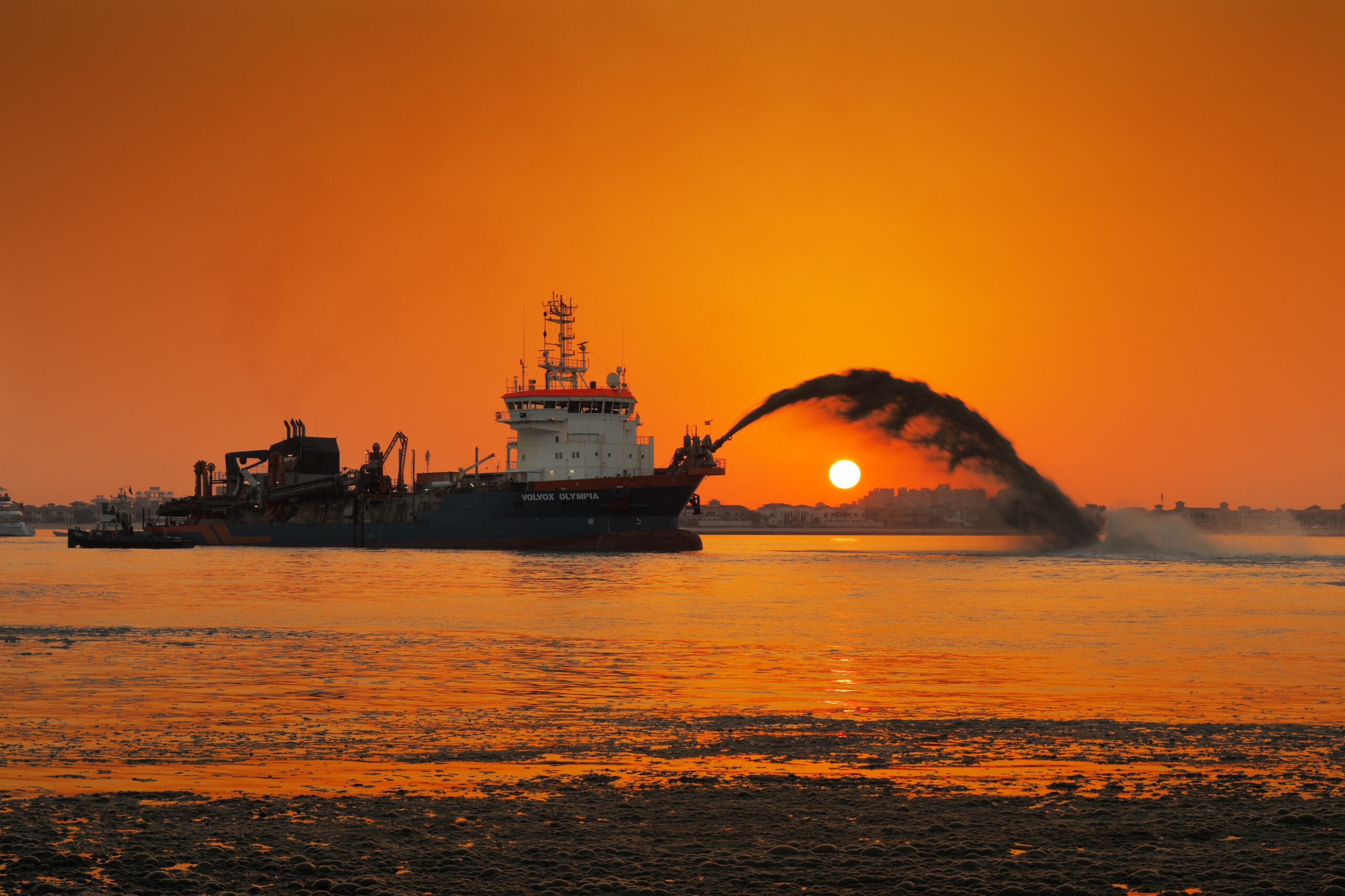
Integrated scheduling of gantry cranes, container trucks and yard cranes in on-dock railway operation areas at multimodal container ports

“Abstract

On-dock railway operation areas at sea-rail container ports play a crucial role in transferring containers between maritime and rail transportation systems. The operational efficiency of these areas depends on synchronizing rail and yard container handling equipment, including gantry cranes, container trucks, and yard cranes. However, time-sensitive container handling, seamless equipment coordination, and complex operational conflicts make multi-equipment scheduling a challenging decision-making problem. This study introduces an integrated scheduling method that both alleviates inter-equipment interferences and balances gantry cranes’ workloads. The underlying problem is formulated as a binary integer programming model using a novel space-time-state network. According to the specific model structure, a model reformulation method is proposed here to convert the original three-equipment scheduling model into a single-equipment scheduling version. Additionally, a Lagrangian relaxation-based heuristic is developed to efficiently solve the reformulated model. Numerical experiments are conducted to validate the effectiveness of the proposed solution approach under various instance settings and provide managerial insights into the problem. Computational results demonstrate that the effectiveness and efficiency of the proposed solution approach. Furthermore, the results also indicate that enhanced operational efficiency in the operation area can only be achieved when the railway and storage side handling capacities are well-matched.”

Xia, T., Wang, L, Zhang, Q., Dong, JX, Song, DP, Zhu, XN. (2024). Integrated scheduling of gantry cranes, container trucks and yard cranes in on-dock railway operation areas at multimodal container ports, IET Intelligent Transport Systems.

The full report is accessible via: https://doi.org/10.1049/itr2.12600

The Implications of ‘Green Seaworthiness’ on the Insurability of Global Maritime Risk

“Abstract

The environmental impact of vessels is a prevalent concern for stakeholders throughout the maritime industry. Recent decarbonisation initiatives present new challenges to shipowners with potential far reaching implications. In the event of a vessel’s non-compliance with decarbonisation regulations, there is a risk of ‘green unseaworthiness’ and penalisation under marine insurance contracts. This study examines these implications from a legal and commercial perspective, through semi-structured elite interviews with 47 key stakeholders in the global maritime and marine insurance industries, and two focus groups with national governmental maritime policy makers. Ultimately, there are limited concerns from a physical risk perspective for marine insurers. However, from a reputational point of view, the moral hazard of non-compliance is a highly probable emerging risk for marine insurers, with potential knock-on effects to the maritime industry seeking risk transfer. Introducing innovative insurer-backed value propositions are recommended to mitigate such potential effects.”


Mackenzie, A., Bryce, C., Moutzouris, I. (2024), The Implications of ‘Green Seaworthiness’ on the Insurability of Global Maritime Risk, SSRN working paper, DOI: https://dx.doi.org/10.2139/ssrn.5039158

The full report is accessible via: https://dx.doi.org/10.2139/ssrn.5039158

For related publications please see Resources – UK National Clean Maritime Research Hub

Policy Bulletin 001: Eco-ship investment and price differentials

There are insufficient financial incentives to stimulate eco-ship investment (where engines are more fuel efficient) risking missing emissions reduction targets.

In this research by Clean Maritime Research Hub’s Dr Ioannis Moutzouris and colleagues the price differentials are explored using data over recent years.

Policy recommendations include the need for:

  • Clarity and certainty around market-based measures and alternative fuels regulations
  • Green finance options to encourage investment in eco-ships
  • Fossil fuel levies to discourage conventional ship use and encourage eco-ship investment

You may also be interested in Determinants of the price premium for eco vessels – UK National Clean Maritime Research Hub
 

Suggested citation:

Moutzouris, I., & Copeland, C. L. (2025). Eco-ships investment and price differentials. UK National Clean Maritime Research Hub. https://doi.org/10.5281/zenodo.20139293

Determinants of the price premium for eco vessels

“Abstract

Shipping companies face the trilemma of investing in cheaper but more polluting conventional vessels, in more expensive but eco-friendly ones or postponing their investment. We quantify the price premium paid for eco-friendly vessels and investigate its determinants. The results indicate that eco vessels trade at an average premium of 25% compared to their conventional counterparts, while the corresponding income premia are between 9% and 15%. Our findings further suggest that the price premium depends on the market conditions, with income premia, past price premia, and fleet supply being strong drivers, while fuel costs and market liquidity have a less important effect. The magnitude and significance of these drivers vary based on the market state and segment. Overall, the paper documents the adverse effect that the current technological and regulatory uncertainty has on vessel investment and highlights the need for further policy intervention to reduce market uncertainty and encourage green investment.”


IOANNIS, C. M., NIKOS, C. P., MALVINA, M., MICHAEL, N. T. & YAO, S. 2024. Determinants of the price premium for eco vessels. Transportation Research Part D: Transport and Environment, 136, 104414.

The full report is accessible via: https://doi.org/10.1016/j.trd.2024.104414

Achieving the global net-zero maritime shipping goal: The urgencies, challenges, regulatory measures and strategic solutions

“Abstract

Maritime shipping emissions have been identified as a remaining issue and have been the key focus for a decade. This study systematically summarises the Imperatives, Challenges, Strategic Regulatory and R&D Measures based on our investigations and analysis. In addition to the strategies and measures we gathered and brought here for the goal of a clean maritime world, some tactical technology gaps were identified along with a breakthrough technology development idea to integrate marine vessel design and efficiency processes systematically.”


Achieving the Global Net-Zero Maritime Shipping Goal: The Urgencies, Challenges, Regulatory Measures and Strategic Solutions, Liu, P*; Xu, Y; Turkmen, S; Xie, X; Fan, S; Ghassemi, H; He, G; “Short Communication”

The full communication is accessible via: Achieving the global net-zero maritime shipping goal: The urgencies, challenges, regulatory measures and strategic solutions – ScienceDirect