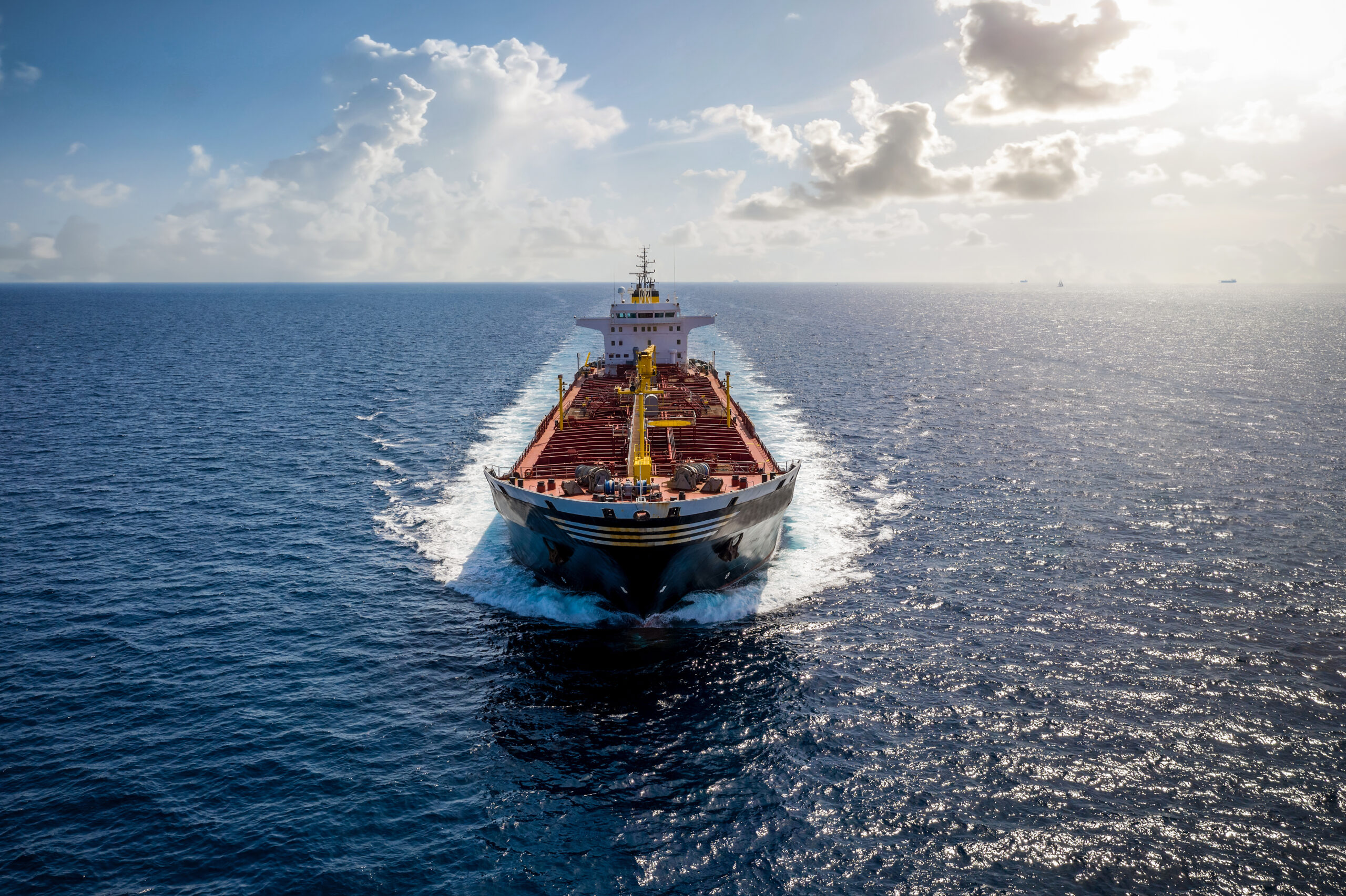
Policy Bulletin 001: Eco-ship investment and price differentials

There are insufficient financial incentives to stimulate eco-ship investment (where engines are more fuel efficient) risking missing emissions reduction targets.

In this research by Clean Maritime Research Hub’s Dr Ioannis Moutzouris and colleagues the price differentials are explored using data over recent years.

Policy recommendations include the need for:

  • Clarity and certainty around market-based measures and alternative fuels regulations
  • Green finance options to encourage investment in eco-ships
  • Fossil fuel levies to discourage conventional ship use and encourage eco-ship investment

You may also be interested in Determinants of the price premium for eco vessels – UK National Clean Maritime Research Hub


Suggested citation:

Moutzouris, I., & Copeland, C. L. (2025). Eco-ships investment and price differentials. UK National Clean Maritime Research Hub. https://doi.org/10.5281/zenodo.20139293
Modelling of refuelling through the entire equipment of HRS: use of dynamic mesh to simulate heat and mass transfer during throttling at PCV

“Abstract

Hydrogen refuelling is imperative for the emerging market of hydrogen vehicles. The pressure control valve (PCV) at the hydrogen refuelling station (HRS) plays a major role in ensuring that hydrogen delivery to the vehicle follows the prescribed refuelling protocols. A three-dimensional CFD model with a detailed resolution of PCV motion affecting heat and mass transfer is developed. The PCV motion controlling the mass flow rate is simulated using dynamic mesh. The CFD model captures refuelling from high-pressure tanks through entire HRS equipment to onboard tanks, capturing pressure and temperature changes upstream and downstream of the PCV. The Joule-Thomson effect resulting in a hydrogen temperature increase at PCV is captured using the NIST real gas database. The model is validated against Test No.1 of NREL on refuelling through the entire equipment of HRS. The CFD model can be used to design HRS equipment parameters, including PCV, and develop efficient refuelling protocols.”


Ebne-Abbasi, H., Makarov, D.  and Molkov, V. (2024) ‘Modelling of refuelling through the entire equipment of HRS: use of dynamic mesh to simulate heat and mass transfer during throttling at PCV’, Hydrogen Safety, 1(1), pp. 12–32.

The full report is accessible via: https://doi.org/10.58895/hysafe.4

Determinants of the price premium for eco vessels

“Abstract

Shipping companies face the trilemma of investing in cheaper but more polluting conventional vessels, in more expensive but eco-friendly ones or postponing their investment. We quantify the price premium paid for eco-friendly vessels and investigate its determinants. The results indicate that eco vessels trade at an average premium of 25% compared to their conventional counterparts, while the corresponding income premia are between 9% and 15%. Our findings further suggest that the price premium depends on the market conditions, with income premia, past price premia, and fleet supply being strong drivers, while fuel costs and market liquidity have a less important effect. The magnitude and significance of these drivers vary based on the market state and segment. Overall, the paper documents the adverse effect that the current technological and regulatory uncertainty has on vessel investment and highlights the need for further policy intervention to reduce market uncertainty and encourage green investment.”


IOANNIS, C. M., NIKOS, C. P., MALVINA, M., MICHAEL, N. T. & YAO, S. 2024. Determinants of the price premium for eco vessels. Transportation Research Part D: Transport and Environment, 136, 104414.

The full report is accessible via: https://doi.org/10.1016/j.trd.2024.104414

Cryogenic energy assisted power generation utilizing low flammability refrigerants

“Abstract

Cryogenic carbon-neutral fuels are potential alternatives as future marine fuels, releasing waste cryogenic energy during regasification and waste thermal energy during combustion. Organic Rankine Cycles (ORCs), using flammable hydrocarbon working fluids, are the preferred waste energy reutilization technology, prioritized over Brayton and Kaline cycles due to their compact system configuration. However, hydrocarbon flammability and explosiveness poses a huge safety risk. Therein lies the novelty of this study which presents an advanced dynamic model of a cryogenic enhanced ORC utilizing low flammability hydrofluorocarbons as working fluids for simultaneous reutilization of waste thermal and cryogenic energy from carbon-neutral cryogenic fuels. The evaporation temperature exhibits a direct correlation with energy and an inverse correlation with the exergy performance. System overcharging leads to a drastic performance decline, while undercharging can be tolerated to a certain liquid-to-volume ratio until critical failure. Marine classification societies’ recommendations-based scenarios were employed to gauge the emission reduction potential of low flammability working fluids for cryogenic ORCs, pitted against traditional combustion technologies. A maximum specific net-work, thermal efficiency, exergy efficiency, and cryogenic energy efficiency of 45.64 kJ/kg, 10.43 %, 12.75 %, and 11.8 % was achieved, respectively, with 85 % reduction in GHG emissions, using R452B as the working fluid.”
Farrukh S., Wu D., Taskin A., Dearn K. Cryogenic energy assisted power generation utilizing low flammability refrigerants (2024) Energy, 307, art. no. 132770. DOI: 10.1016/j.energy.2024.132770

The full report is accessible via:https://doi.org/10.1016/j.energy.2024.132770

Numerical study of the spark ignition of hydrogen-air mixtures at ambient and cryogenic temperature

“Abstract

An accurate determination of minimum ignition energy (MIE) is essential for assessing electrostatic hazards and characterising potential for occurrence of combustion in flammable mixtures. This is of utmost importance for hydrogen-air mixtures characterised by a MIE equal to 0.017 mJ, whereas conventional flammable gases are characterised by MIE typically higher than 0.1 mJ. The study aims at developing and validating a CFD three-dimensional model capable to simulate complex unsteady physical and chemical phenomena underlying capacitive discharge spark. The model accounts for the experimental apparatus details, including the effect of electrodes’ gap and associated heat losses. The numerical approach accurately reproduced the experimental measurements of MIE for mixtures of hydrogen with air at initial temperature ranging from ambient (T = 288 K) to cryogenic (T = 123 K). Hydrogen concentration in air was included in the range 10–55% for tests at T = 288 K, and 20–60% for tests at T = 173 K and 123 K respectively. Simulations assess the impact of experimental characteristics and design, such as the electrodes’ dimension, and numerical features on process dynamics, growth of the flame kernel and MIE predictions.”


Cirrone, D. et al. (2024) ‘Numerical Study of the spark ignition of hydrogen-air mixtures at ambient and cryogenic temperature’, International Journal of Hydrogen Energy, 79, pp. 353–363. doi:10.1016/j.ijhydene.2024.06.362.

The full report is accessible via: https://doi.org/10.1016/j.ijhydene.2024.06.362

Hydrodynamic Development and Optimisation of a Retrofittable Dual-Mode Propeller Turbine

“Abstract

Dual-mode propellers, as propulsion and turbine devices, have found widespread application in renewable energy systems for marine vehicles, particularly in sailing boats and yachts. However, the existing dual-mode propellers in these contexts are typically chosen in an off-the-shelf manner, indicating a lack of hydrodynamic optimisation to enhance both the propulsion and energy generation efficiency in the same rotor. To address this limitation and furnish scientific validation of the design of a dual-mode propeller turbine rotor optimised to achieve a balanced performance in both propulsion and energy generation, rigorous experimentation was conducted using specialised software, Rotorysics 2019, and a case study vessel, the Princess Royale. Utilising prior experimental data for this propeller turbine, code validation was undertaken to ensure accurate prediction of the effects of the pitch, blade count and expanded area ratio on the performance in both modes. With the intention of achieving optimal power generation and propulsion efficiencies in conjunction with a single rotor, the findings reveal that the optimised fixed-pitch propeller exhibits dual functionality. They serve as both propulsion and tidal/current turbines with balanced efficiency. They are particularly suitable for low-speed vessels such as yachts anchored in currents or for sailboats utilising a propeller as a towed turbine. Through thorough testing and analysis, the concept of a dual-mode propeller turbine was feasible. Analysing them separately, in terms of the propulsion, the best geometry found through numerous tests of different expanded area ratios, blade number, pitch and speed was the 3-blade, 0.6 pitch ratio, which achieved a propulsive efficiency of 54.33% (0.5433204) and a power coefficient of 0.291843. Conversely, if the focus was on power generation while maintaining excellent propulsive efficiency, the optimal geometry would be the 5-blade, 0.6 pitch ratio, which offers a power coefficient of 0.348402 and a propulsive efficiency of 48.55% (0.48547). However, when using both power generation and propulsion as the criteria, the 5-blade, 0.6 pitch ratio, with an EAR of 0.387142, is superior, with balanced optimisation, offering a propulsive efficiency of 52.53% (0.52527) and a power coefficient of 0.319718. As expected, this encompasses a higher blade number for increased power generation efficiency and a higher pitch ratio for increased propulsive efficiency.”


Erriah, J.R., Liu, P. and Turkmen, S. (2024) ‘Hydrodynamic development and optimisation of a retrofittable dual-mode propeller turbine’, Energies, 17(13), p. 3138. doi:10.3390/en17133138.

The full report is accessible via: https://doi.org/10.3390/en17133138


For related publications please see Resources – UK National Clean Maritime Research Hub

Modelling environmental life cycle performance of alternative marine power configurations with an integrated experimental assessment approach: A case study of an inland passenger barge

“Abstract

There is pressure on the global shipping industry to move towards greener propulsion and fuel technologies to reduce greenhouse gas emissions. Hydrogen and electricity are both recognised as pathways to achieve a net-zero. However, in the evaluation of the environmental performance of these alternative marine power configurations, conventional life cycle assessment (LCA) methods have limitations reflecting the varied nature of ship design and operational modes. The integration of LCA with experimental assessment could remedy the shortcoming of conventional approaches to data generation. The system energy demand data in this study was generated based on specific ship design and directly fed into life cycle assessment. To demonstrate the effectiveness and potential the approach was applied to a case study of inland waterway vessel. Suitable hybrid PV/electricity/diesel and hydrogen powered fuel cell systems for the case vessel were modelled; and hydrodynamic testing and dynamic system simulation was undertaken to provide ship performance data under various operational/environmental profiles. Lifecycle assessment (LCA) indicated hydrogen and electrical propulsion technologies have the potential for 85.7 % and 56.2 % emissions reduction against an MGO base case, respectively. The results highlight that implementation of both technologies is highly dependent on energy production pathways. Hydrogen systems reliant on fossil feedstocks risk an increase in emissions of up to 6.3 % against the MGO base case. Sensitivity analysis indicated an electrical system with electricity production from 79.5 % renewables could achieve savings of 82.2 % in GHG emissions compared to the MGO base case. Crucially, the results demonstrate a further development of the LCA approach which can enable a more accurate environmental performance evaluation of alternative marine power configurations considering specific ship design and operational characteristics. Ultimately this addition makes the results more meaningful for commercial operations and decision making in the selection of alternative marine power systems to support the transition to net-zero.”


Wang, Y. et al. (2024) ‘Modelling Environmental Life Cycle Performance of Alternative Marine Power Configurations with an Integrated Experimental Assessment Approach: A case study of an inland passenger barge’, Science of The Total Environment, 947, p. 173661. doi:10.1016/j.scitotenv.2024.173661.

Please use the DOI link above to access the full report.

For related publications please see Resources – UK National Clean Maritime Research Hub

Breakthrough safety technology of explosion free in fire self-venting (TPRD-less) tanks: The concept and validation of the microleaks-no-burst technology for carbon-carbon and carbon-glass double-composite wall hydrogen storage systems

Abstract

The paper describes the breakthrough microleaks-no-burst (μLNB) safety technology of explosion free in fire self-venting hydrogen tanks that do not require thermally-activate pressure relief devices (TPRD). The technology implies melting of the hydrogen-tight liner before hydrogen-leaky double-composite wall loses its load-bearing ability. Hydrogen then flows through the wall’s microchannels and either burns in microflames on its own or together with resin. The experimental validation of the technology is presented for 7 prototypes with the nominal working pressure of 70 MPa made of carbon-carbon or carbon-glass composites. The prototypes are fire tested at the specific heat release rate HRR/A = 1 MW/m2 characteristic for gasoline/diesel spill fires. The μLNB technology eliminates catastrophic consequences of tank rupture in fire: blast waves, fireballs, and projectiles. The technology limits hydrogen accumulation in naturally ventilated enclosures. It reduces the risk of hydrogen-powered vehicles to an acceptable level below that for fossil fuel automobiles, including underground parking and tunnels. It provides an unprecedented level of life safety and property protection.”

Molkov V, Kashkarov S, Makarov D. Breakthrough safety technology of explosion free in fire self-venting (TPRD-less) tanks: The concept and validation of the microleaks-no-burst technology for carbon-carbon and carbon-glass double-composite wall hydrogen storage systems. International Journal of Hydrogen Energy, Volume 48, Issue 86, 22 October 2023, Pages 33774-33785.

The full publication is accessible via: https://www.sciencedirect.com/science/article/pii/S0360319923024448

Modelling and analyzing the stacking strategies in automated container terminals

“Abstract

Stacking strategies determine which yard block to allocate the container and which bay and column in the block to stack the container. They play an important role to ensure yard efficiency and reduce vessel berthing time and truck waiting time. This paper models and analyses the impact of stacking strategies on the container terminal operations by a two-stage approach. We consider common stacking rules including random stacking rule and distance-based priority assigning rule. In the first stage, the individual operations of handling equipment are modelled by travel time models considering uncertainty in operations. The effects of stacking rules on individual operations, such as Automatic Guided Vehicle (AGV) traveling times, landside yard crane operation times and seaside yard crane operation times, are estimated. In the second stage, we use a semi-open queuing network to model the interactions between individual operations, and the results of the first stage are used as inputs in the second stage network. We analytically examined the handling times of the relevant equipment under different stacking strategies and their sensitivity to yard density. Finally, we use simulation method to verify the effectiveness of the results of our model. The results can offer insights into which stacking strategies are more suitable under different criteria and circumstances such as balancing workload, increasing yard utilization and reducing congestion for external trucks.”

Zhang, X., Jia, N., Song, DP., & Liu, B. (2024). Modelling and analyzing the stacking strategies in automated container terminals. Transportation Research Part E: Logistics and Transportation Review, 187, 103608. DOI: 10.1016/j.tre.2024.103608

Please use the DOI link above to access the full report.

For related publications please see Resources – UK National Clean Maritime Research Hub

Effect of pressure pores size on hydrodynamic and hydroacoustic marine propeller performances under cavitating case

“Abstract

The numerical work presented in the paper investigates the effect of pressure pores on hydrodynamic and hydroacoustic performances. This research aims to reduce cavitation area and underwater noise by mitigating the tip vortex cavitation. Compared to the few studies devoted to the pressure pores technique, several configurations based on the E779A marine propeller have been tested by considering different azimuthal and radial step values, a wider pore region concentrated at the top of the blade, and several pore diameter values. In addition, a numerical simulation was started to verify the effectiveness of the theoretical models in detecting the effect of pressure pores on the acoustic propagation generated by the propellers tested. The numerical approaches combining cavitating flow and noise propagation are performed using a hybrid method, which solves the Ffowcs Williams-Hawkings (FW–H) equation. A validation of the numerical simulation is carried out for cavitating and non-cavitating cases. Open water performances, cavitation area, sound pressure levels, and thrust distributions are analysed for two cavitation numbersσ= 1,763 and σ= 1,029. The obtained results reveal that the cavitation area decreases as the pressure pore radius increases, but a slight reduction in propulsive efficiency accompanies this. Particularly for the pores radius of 0,00264Dpropeller efficiency loss doesn’t exceed 2,6 % and 4,05 % for the two cavitation numbers investigated. Nevertheless, this configuration showed better acoustic performances with a diminution of 10 dB in overall sound pressure level compared to the propeller without pressure pores.”


Belhenniche, S.E. et al. (2024) ‘Effect of pressure pores size on hydrodynamic and hydroacoustic marine propeller performances under cavitating case’, Ocean Engineering, 307, p. 118164. doi:10.1016/j.oceaneng.2024.118164.

The full report is accessible via:https://doi.org/10.1016/j.oceaneng.2024.118164