Clean Maritime Research Hub Seminars

UK MaRes Hub policy fellow, Dr. Claire Copeland, has organised a series of seminars to share knowledge and information with policymakers.

The seminar series consisted of a range of presentations over three months, covering hub topics of :

  • Advances in scale up of marine fuels, and their safe use


Presentations delivered included:

1. Crack, Reform, Recover: Optimising alternative marine fuels

Presented by: Professor Athanasios Tsolakis, Birmingham University

Summary: Exhaust gas fuel reforming is a process that uses the heat from engine exhaust to help break down fuel or ammonia into a hydrogen-rich gas. This gas burns better than regular fuel, which makes engines more efficient and cleaner. In engines that run on ammonia, this process also helps burn the ammonia more effectively and reduces emissions of any unspent ammonia from
the exhaust (i.e. ammonia slip).

This seminar provided an overview of:

  • Ammonia cracking with heat recovery
  • Exhaust gas fuel reforming
  • Case studies of catalytic reactors
  • Engine performance and emissions
  • Environmental catalysis


2. Out of the tank into the air: Ammonia dispersion

Presented by: Professor Vladimir Molkov, Ulster University

Summary: There are complex changes that occur when liquid ammonia is released from a pressurised storage tank. These changes occur not only for the released ammonia but also the conditions in the storage tank.

During release from a pressurised tank, liquid ammonia boils due to pressure drop and becomes a gas. Toxic gaseous ammonia is easily dispersed in the atmosphere. The hazard distance depends on a wind conditions. Understanding the complex underlying physical phenomena, including dispersion in meandering wind, is important for inherently safer use of ammonia as a fuel.

This seminar provided an overview of the numerical experiments performed using a contemporary tool developed by Prof. Molkov and his team to understand the phenomenon and validate against large-scale experiments performed by INERIS in France.

It was found that the model was able to reliably predict:

  • The amount of released ammonia,
  • It’s concentration at different distances in realistic wind conditions
  • The resulting final pressure in the tank.

The model is able to define hazard distance (both flammability and toxicity) through dispersion. The model can be used as a contemporary tool for safety engineering, hazards and associated
risk assessment, and developing tank management safety strategies for liquid ammonia storage. The model will be further validated against the bunkering and debunkering of ammonia
experimental data when it becomes available.


3. Using AI to improve port operation efficiency

Presented by: Professor Ying Xie, Cranfield University

Summary: Persistent bottlenecks at ports have significantly disrupted global supply chains, necessitating more efficient seaport operations to address yard density and port congestion. An untapped but potentially critical approach to mitigating these challenges is to leverage container characteristics, road traffic data and machine learning to optimise container storage strategy
and ferry scheduling.
An empirical study conducted at a container seaport shows that our framework yields cost savings ranging from c.15-30% compared to the Business-as-Usual scenario. Additionally, the road traffic prediction for ferries yields an accuracy of over 75%.


4. Port Decarbonisation: Emissions, measures and studies

Presented by: Professor Dongping Song, Liverpool University

Summary: Professor Song presented the emission sources at seaports and categorised them based on criteria such as geographic location and emission scope. Subsequently, he discussed emission reduction measures at seaports, organizing them into six structured categories:

  1. Operational measures
  2. Technical measures
  3. Fuel and energy measures
  4. Infrastructural measures
  5. Digitalization measures
  6. Policy and collaboration measures

A time-phased roadmap outlining mitigation strategies for port decarbonization on the path to net zero was presented, concluding with an overview of several case studies that demonstrate the application of specific emission reduction measures.


5. Wind-assisted ship propulsion: Status, challenges and the future

Presented by: Dr Jean-Baptiste Souppez, Aston University

Summary: Maritime transportation accounts for 90% of the world’s trade and is responsible for 3% of global energy-related carbon dioxide emissions. With ever-more stringent emission regulations, such as that of the International Maritime Organisation (IMO), there is a vital and urgent need to decarbonise shipping.

While operational measures and alternative fuels are proving suitable short-term solutions to meet these novel regulatory constraints, as the use of fossil fuels tapers off, wind-assisted ship
propulsion has emerged as a long-term solution, with a range of technologies available. These include soft sails, rigid wings, rotors, kites and many more.
This talk presented the state of the art in wind-assisted ship propulsion, including technologies, emission reduction potential, current and future vessels, and related research, such as routing algorithms. Further, the recent developments, challenges and future perspectives were discussed to provide a holistic view of wind-assisted ship propulsion.
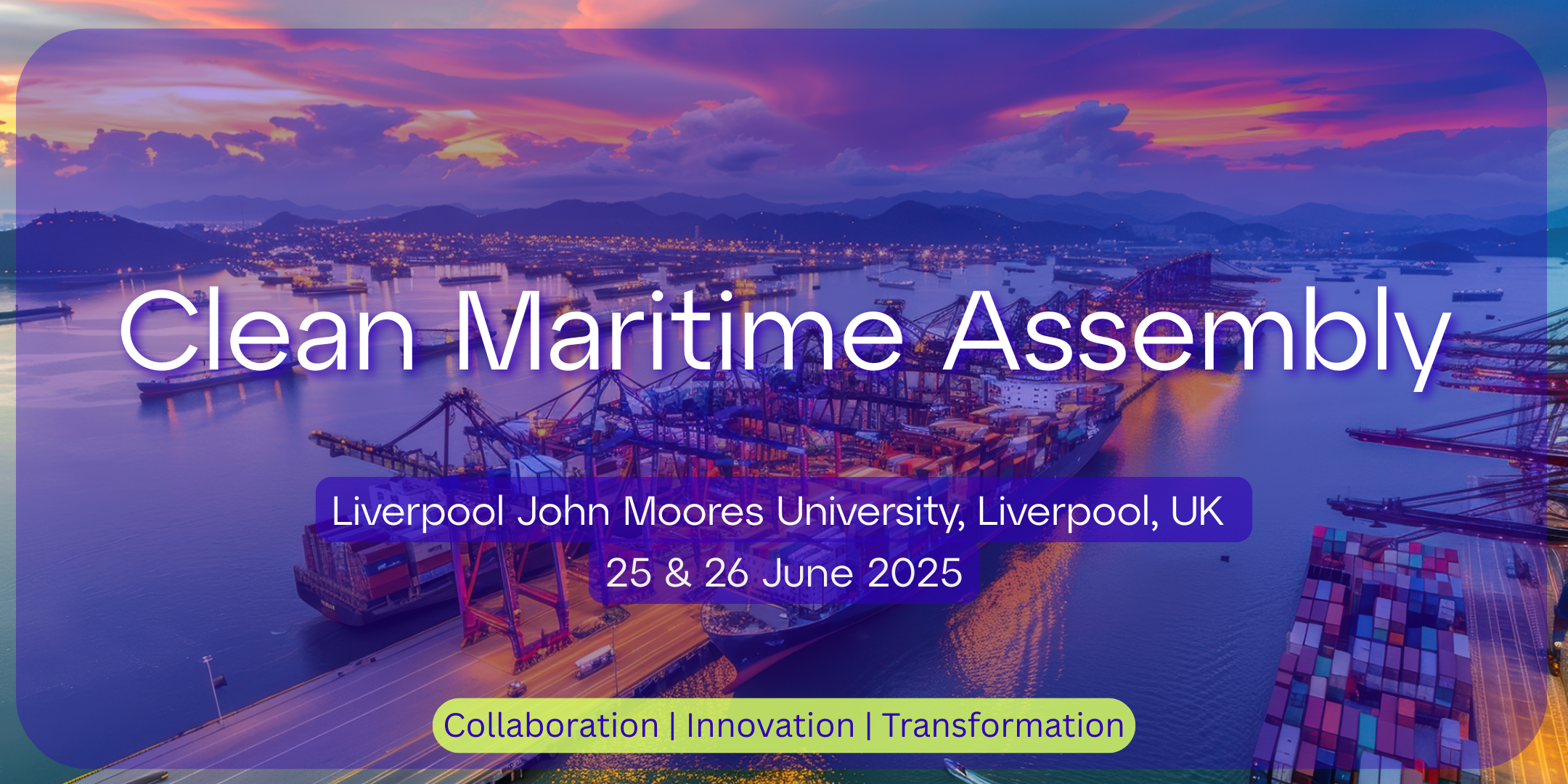
Clean Maritime Assembly 2025: Poster Winners & Photo Mosaic

We’d like to extend our sincere thanks to everyone who attended the Clean Maritime Assembly 2025. It was fantastic to see such strong engagement from both industry professionals and academic experts. The event was filled with vibrant discussions, valuable insights, and a real sense of shared purpose. Your contributions helped create an inspiring atmosphere, and we’re grateful for the energy and enthusiasm you brought to the day.

A particular highlight of the 2 days were the poster presentations, which showcased some impressive research being done to decarbonise the maritime sector. These displays not only allowed attendees to engage with cutting-edge research and innovation, but also provided researchers—especially early-career participants—with a valuable opportunity to enhance their presentation and communication skills. The breadth and depth of work on display reflected the sector’s commitment to a cleaner maritime future. We’d like to thank all entrants for their contributions and are delighted to announce the winners, as voted by you!

Poster Competition Winners

1st Place: Prathmesh Rane, University of Manchester and Port of Dover: Smart Seas, Safe Harbours: A Digital Twin for the Port of Dover 

2nd Place: Ugochukwu Ngwaka, Durham University: Vessel design and efficiency – A decision support tool for energy systems, energy consumption, lifecycle emissions and cost analysis

3rd Place: Dibyendu Roy, Durham University: Molten Carbon Fuel Cell Based Power and Propulsion System with Integrated Carbon Capture

Photo Mosaic

On Day 1 of the Assembly, the day was captured in photos, to produce a photo mosaic. If you were there, take a look and see if you can spot yourself or your colleagues. It’s a great snapshot of the energy and collaboration that defined the day.

Thanks again for being part of the Clean Maritime Assembly and for your valuable feedback which will help shape future events. Watch this space as we add the presentations from the Assembly to our Resources library!

Navigating Net Zero: Economic, Financial, and Insurance Insights into Sustainable Shipping

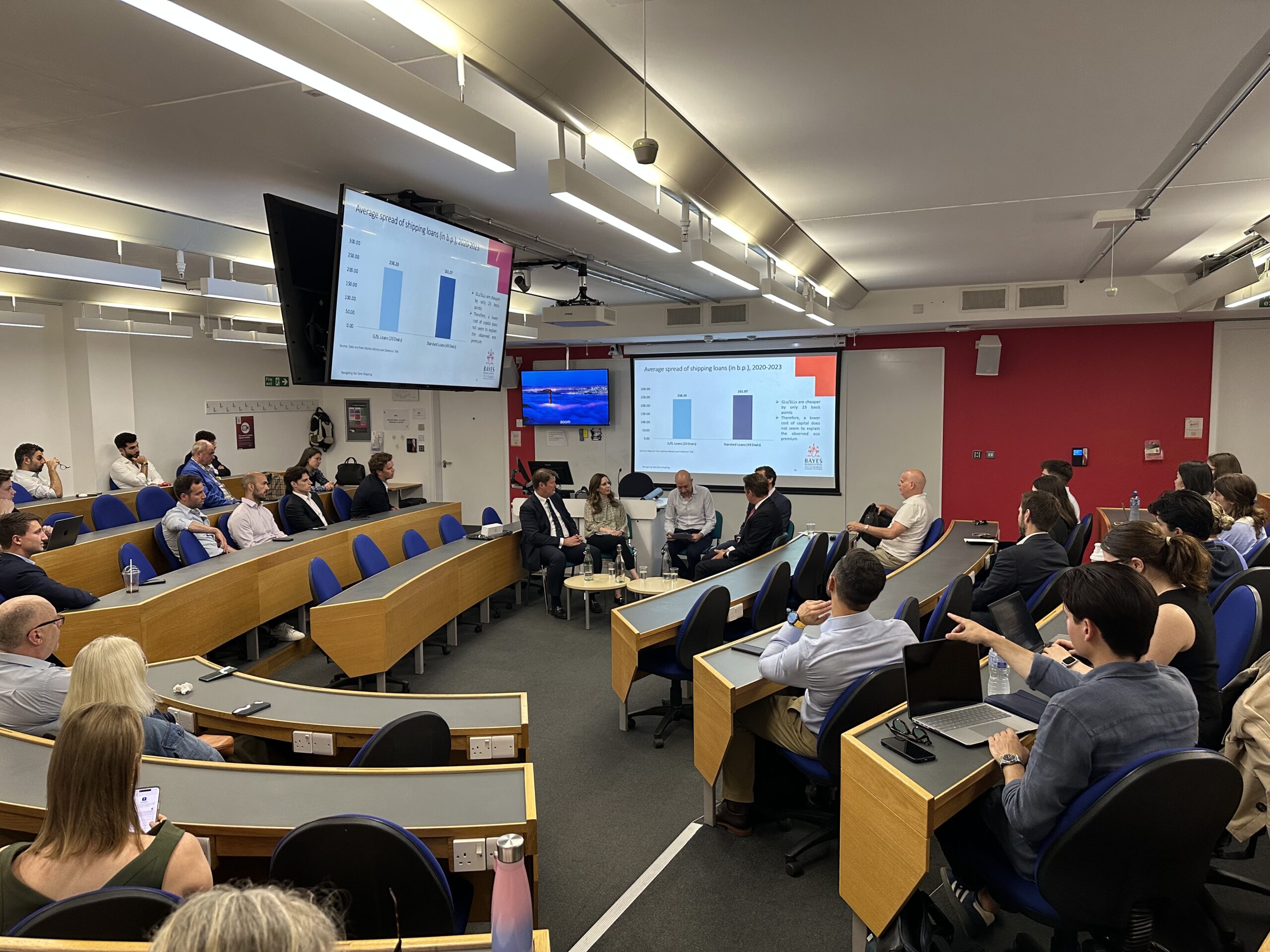
The event “Navigating Net Zero: Economic, Financial, and Insurance Insights into Sustainable Shipping”, held on 24 June 2025 at Bayes Business School, focused on the business and policy challenges of decarbonising the shipping industry.

On Tuesday 24 June, Dr Ioannis C. Moutzouris and Professor Ioannis Kyriakou presented recent findings from pioneering research conducted at Bayes on the economic, financial, and insurance aspects of shipping’s net-zero transition. This research has been informing both industry and policy makers.

A panel of industry leaders provided  insights into the transition and its business and economic implications:

  • Mary Alexandrakis, Head of Sustainability Strategy and Compliance at Borealis Maritime
  • Tobias Backer, Executive Director at Pelagic Partners;
  • Andrew Mackenzie, Head of Claims at Clearwater UW Limited
  • Alastair Stevenson, Head of Digital Analytics at SSY

As the sector faces increasing regulatory and environmental pressures, the transition to net zero presents both risks and opportunities.

For further information, please see Navigating Net Zero and Navigating Net Zero: Economic, Financial, and Insurance Insights into Sustainable Shipping • City St George’s, University of London

You may also be interested in following Bayes Business School on LinkedIn. 

Behavioural Finance Working Group 18th International Conference

The 18th International Behavioural Finance Working Group (BFWG) Conference took place in London from June 4th to 6th, 2025. It brought together academics and practitioners from around the world to explore the latest research in behavioural finance. With over 110 papers presented by scholars from 28 countries, the conference covered a wide array of topics including asset pricing, corporate governance, fintech, sustainability, and investor psychology.

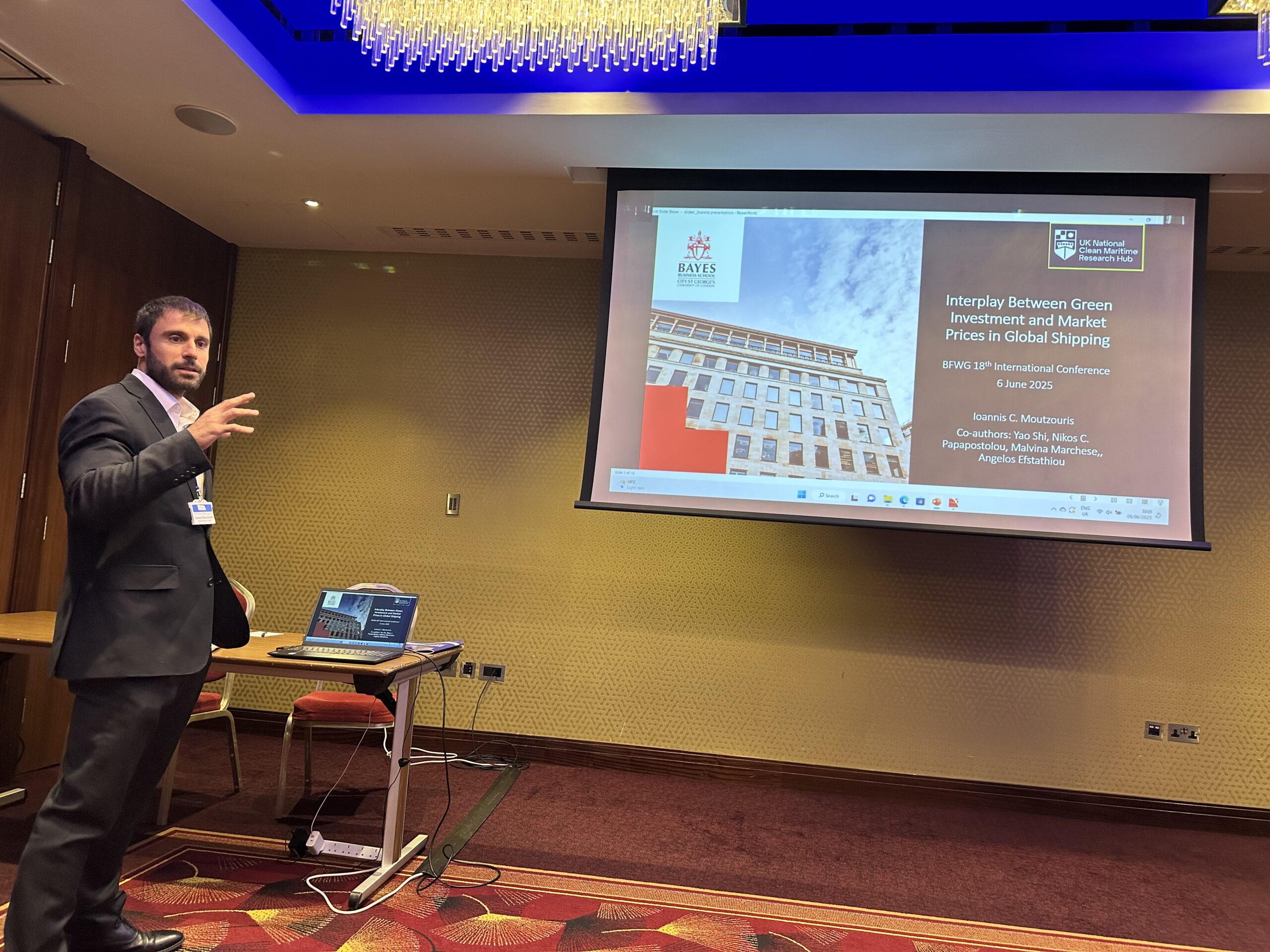
On Friday, 6th June, during a session dedicated to sustainable finance—covering themes such as ESG ratings, green investment under uncertainty, and sustainability-integrated portfolios—Dr. Ioannis Moutzouris presented a hub-related paper titled “Green Investment Under Market Uncertainty: Scrubber Installation in Shipping.”

The paper presented can be accessed via CID-Summer-2025-Scrubber-040325.pdf

For further information on the conference, please see 18th International Behavioural Finance Conference – Behavioural Finance Working Group


UKNCMRH Showcases Research at Department for Business and Trade Social Research Conference

On 19 March 2025, the Department for Business and Trade (DBT) organised a conference in London, themed “From Analysis to Policy Insight.” This event brought together social researchers in the department, communication experts, and academics to discuss how to communicate analysis so that it can impact upon policy thinking, improving outcomes for all.

Dr. Ioannis Moutzouris represented Bayes Business School, City St George’s, University of London and the UK National Clean Maritime Research Hub’s in his academic capacity, delivering a presentation on the work conducted.

Dr. Moutzouris highlighted the Hub’s ongoing efforts to accelerate maritime decarbonization with his teams research on the “Determinants of the Price Premium for Eco Vessels”. This study, conducted by Dr. Moutzouris and his colleagues, quantified the price premium paid for eco-friendly vessels and examined the factors influencing this premium. Providing a thematic example of “From Analysis to Policy Insight”, this work subsequently informed the production of the Hub’s first policy bulletin “Policy Bulletin 001: Eco-ship investment and price differentials”, created in collaboration with Dr. Claire Copeland, the UK-MaRes Hub’s policy fellow.

In our policy bulletin, the in-depth research findings on price premium drivers are digested into direct policy recommendations, calling for clarity, and encouraging investment in eco-ships whilst recommending levies to discourage reliance on carbon-intensive fuels. This bulletin serves as a valuable resource for policymakers aiming to create a more sustainable maritime industry.

By bringing together diverse perspectives and expertise, the analytical community at DBT can create a more informed and effective policy environment, contributing to the UK’s economic growth and development.

We would like to extend our gratitude to DBT for providing an opportunity for the valuable work of Ioannis Moutzouris and his team, Claire Copeland (policy fellow) and the wider work of the UK National Clean Maritime Research Hub to be showcased.

For more information about the Department for Business and Trade you can visit their official page.

If you wish to connect with Claire Copeland or Ioannis Moutzouris, please consider attending our Clean Maritime Assembly 2025, or complete our contact form.

New Environmental Challenges for Fiscal, Monetary, and Macroprudential Policy

On 16 January 2025, Dr Ioannis Moutzouris, UK MaRes Hub consortium member and theme lead spoke at the Second International Conference on the Climate-Macro-Finance Interface (2CMFI): “New Environmental Challenges for Fiscal, Monetary, and Macroprudential Policy” that took place at Bayes Business School, City St George’s, University of London.

During the conference, Ioannis presented a paper informed by the current research he is undertaking as a member of the UK MaRes Hub. The paper presented was titled: “The Economics of Shipping Decarbonisation: Carbon, Production, Cost, and Allocative Efficiencies”, authored by Dr Yao Shi and himself.

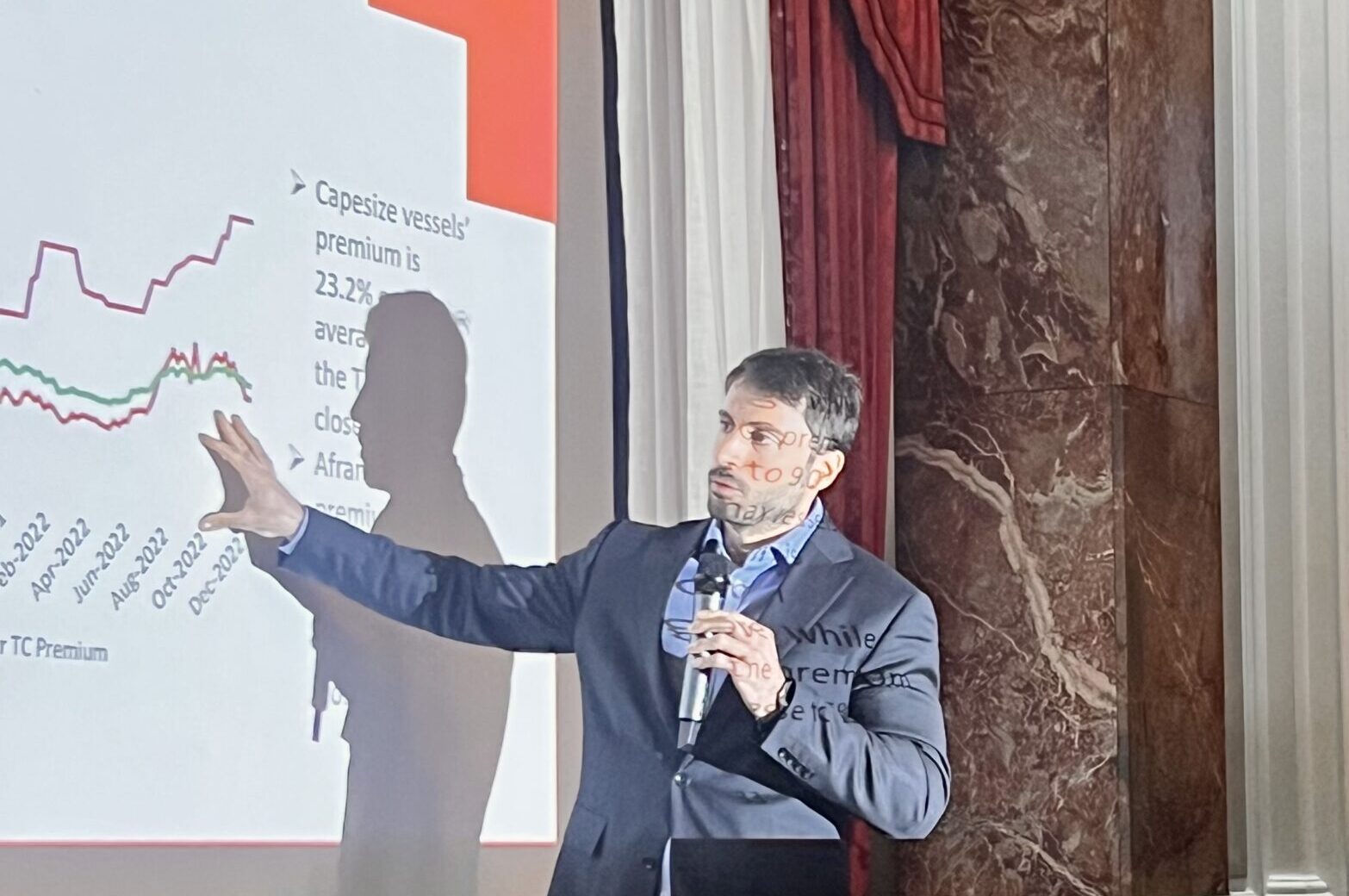
A photograph of Ioannis Moutzouris, captured mid-speech. He is seen standing by a microphone.
Dr Ioannis Moutzouris delivering his presentation.

Further information on the event can be found here: The Rimini Centre for Economic Analysis – New Environmental Challenges for Fiscal, Monetary, Macroprudential Policy 

The material forming Ioannis’ presentation, and that of other speakers can be found under the meetings programme notes and index of sessions: The Second International Conference on the Climate-Macro-Finance Interface: New Environmental Challenges for Monetary, Fiscal, and Macroprudential Policy

AMMONIA: AN ALTERNATIVE FUEL FOR CLEAN MARITIME POWER

We are pleased to announce that Dr. Martin Smith, of St. Andrews University, a member of the UK MaRes Hub will be presenting at AMMONIA: AN ALTERNATIVE FUEL FOR CLEAN MARITIME POWER, taking place on Friday 22 Nov 2024 11:15 – 15:00 GMT at UHI House, Old Perth Road, Inverness, IV2 3JH

This event will delve into the innovative use of ammonia as a sustainable fuel alternative to transform maritime power. It brings together industry leaders, researchers, and technology innovators dedicated to advancing clean energy solutions in the maritime sector.

By focusing on ammonia and hydrogen fuel cell systems, this gathering will provide a comprehensive view of the latest breakthroughs and the potential these fuels hold for the future of clean maritime power.

For further information on this event, and registration please see: Flyer for Ammonia An alternative Fuel for Clean Maritime Power Event

Oceans of Opportunity: A Change of Tide

The UK-MaRes Hub is proud to be contributing to #OceansOfOpportunity, a digital series from the Institute of Marine Engineering, Science & Technology (IMarEST) and Content with Purpose. This documentary will explore the vital work of marine professionals, highlighting how their knowledge, skills, and innovations are advancing the blue economy, while safeguarding the ocean and its precious ecosystem.  IMarEST has partnered with Content With Purpose to launch ‘Oceans of Opportunity: A Change of Tide’, a pioneering digital series that underscores the marine industry’s role in addressing sustainability challenges and improving ocean health.

As part of the series, UK-MaRes Hub features in a short documentary and thought leadership interview to showcase the research going on across the Hub and features some of our world-class research facilities. These include Newcastle University’s Cavitation Tunnel at the Port of Blyth and their Hydrolab in the Armstrong Building, Newcastle.

Prof Ying Xie (Cranfield University), Dr Serkan Turkmen (Newcastle University) and Dr Janie Ling-Chin and Prof Tony Roskilly (Durham University), leverage their research expertise to provide valuable insights into UK-MaRes Hub’s work. Their focus is on the scale-up and safety of alternative fuels, the adaptation of ship designs to accommodate these new fuels, the unique role ports play in the decarbonisation of the sector and the need for stakeholders and policymakers to collaborate to ensure real-world impact. Visit our YouTube channel to watch the videos.

Special thanks to the Port of Tyne and Port of Blyth for allowing us to film on site.

The series previewed on 28th November at IMarEST’s Sir Stanley Gray Lecture at Queen Mary University of London.

To explore the full series and contributors please visit OceansOfOpportunity.


Costas Grammenos Centre for Shipping, Trade and Finance -5th Athens Triennial Meeting

The Costas Grammenos Centre for Shipping, Trade and Finance celebrated it’s 40th anniversary, and 5th triennial meeting in Athens, themed around “Industry challenges: A global perspective from Athens”. 

Dr Ioannis Moutzouris, of Bayes business school, member of the UK National Clean Maritime Research Consortium (theme lead for operations, exploitation of digitalisation and green shipping) provided a presentation entitled “Shipping Sustainability: Economic & Financial Perspectives”, to an audience of excellent peers and panellists.

This presentation highlighted the UK MaRes Hub, related research at Bayes, and the findings from his recent paper: “Determinants of the price premium for eco vessels”. 

Further information on this event can be found on: 5th Athens Triennial Meeting | Bayes Business School (city.ac.uk)

Spotlight on Policy

At the heart of the UK-MaRes Hub’s programme of activity is a commitment to work closely with civic bodies and policymakers to drive forward meaningful change for the sector. To enable the research being undertaken by the Hub to connect with key stakeholders, we’re delighted to have appointed Dr Claire Copeland as the Hub’s Policy Fellow.

Claire brings wide ranging experience to the Hub and has previously undertaken research for the Centre of Energy Integration Systems (CESI) and Centre for Research into Energy Demand Solutions (CREDS) programmes. She has previously secured a research fellowship for the Parliamentary Office of Science and Technology and for several years supported academics with policy impact from their research in the Policy@Sussex initiative.

Claire has a PhD in Science and Technology Policy Studies from the University of Sussex exploring the development of exploratory energy futures on subnational scales. Prior to this she has an MSc in Sustainable Development from the University of Surrey.

Recently Claire has undertaken research on regional decarbonisation for the Durham Energy Institute in partnership with the North East Local Enterprise Partnership, and supported local SMEs under the Arrow Innovation programme helping progress innovative business initiatives.

Claire says about the role: “I am thrilled to join UK-MaRes working on knowledge exchange and mobilisation between the Hub and policy. With 95% of goods arriving in the UK by ship among many other important functions, decarbonisation of this sector plays an important role in fighting climate change.”

Claire will be working with the Hub’s Co-Director, Prof Patricia Thornley (Aston University) and lead of the Clean Maritime Research Policy Unit, to ensure that the key messages from our research reach the right audiences, providing policymakers with access to relevant research expertise.

The Hub has been working with the Department for Transport (DfT) on identifying opportunities to achieve short-term greenhouse gas emissions reductions in the maritime sector and provided evidence as part of the recent IMO Negotiations.

Lifecycle Analysis experts from the Hub are also part of the UN’s Joint Group of Experts on the Scientific Aspects of Marine Environmental Protection (GESAMP).