Clean Maritime Assembly 2025 – Highlights and Headlines Presentations (Day 1)

Lightning-style presentations from industry and academia, showcasing clean maritime activity across the sector.

The following presentations are available for view as part of our Resources Library.

Session 1 – Future Fuels & Safety: Chaired by Prof Rachael Rothman, University of Sheffield

  • Kerry Mullen, Hynamics: “Producer and distributor of low-carbon and renewable hydrogen”
  • Dr Thomas Beard, BMT: “Alternative Fuel Shoreside Infrastructure: Challenges and Opportunities”
  • Dr Paul Davies, Lloyds Register: “Safety Challenges, Alternative Fuels”

Session 2 – Power & Propulsion: Chaired by Dr Angad Panesar, Brighton University

  • Ben Pollock, Mott MacDonald: “Shore Power: Challenge and Opportunities”
  • Martin Olverson, NatPower Marine: “Plotting a course to cleaner shipping”

Session 3 – Vessel Design & Efficiency: Chaired by Dr Janie Ling-Chin, Durham University

  • Dr Inguna Strazdina, NTNU: “Innovating Ocean Operations and Coastal Infrastructure for a Clean Maritime Future”
  • David Wing, Houlder Ltd: “Connecting Ship Design and Operation”
  • Keith Hutchinson, Safinah Ltd: “Holistic ship design and realisation for operational efficiency and sustainability over the life cycle”
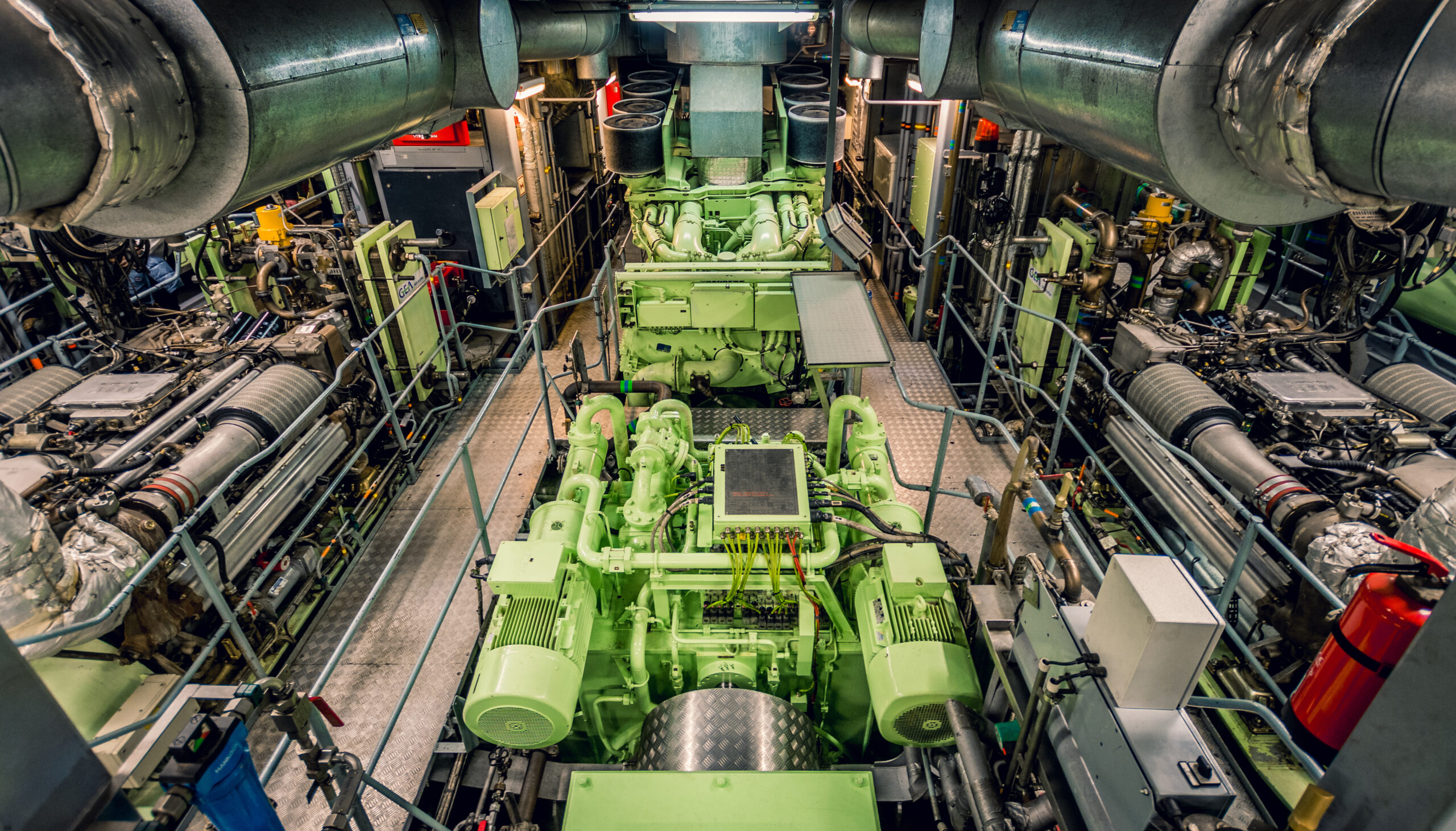
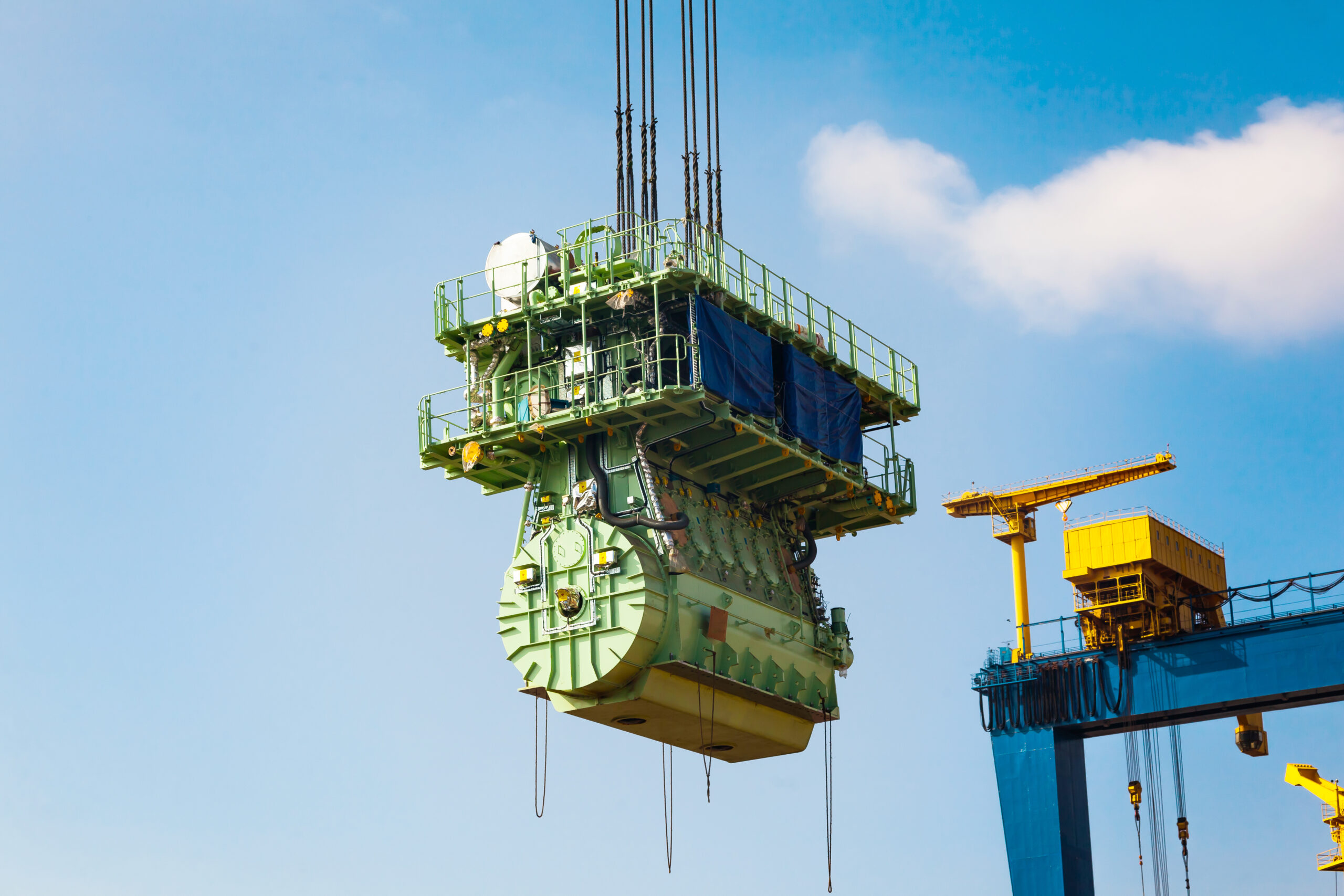
Genetic algorithm-assisted multi-objective optimization for developing a Multi-Wiebe Combustion model in ammonia-diesel dual fuel engines

“Abstract

Direction Injection Dual-Fuel (DIDF) engines fueled with ammonia and diesel are identified as a promising solution for decarbonizing large-scale Compression Ignition (CI) engines. This study addresses the research gap of missing a parametric model for simulating the combustion process in DIDF CI engines using ammonia and diesel. Multi-objective optimization and genetic algorithms are applied to generate a parametric Multi-Wiebe Combustion (MWC) model based on experimental results from a NH3-diesel DIDF CI engine. The innovative approach supports one-dimensional engine modeling with NH3-diesel combustion in GT-Power, enhancing the understanding of direct injection timings, fuel interactions, and combustion dynamics. Key findings include the impact of dual-fuel injection timings and fuel ratios on ignition delay, individual combustion phase durations, and heat release rate, providing a quantitative description of combustion behavior under varying conditions. The validation results show that with injection timing variations from −17.5 to −10 CAD aTDC and NH3 energy ratios ranging from 40 % to 60 %, relative errors remain below 5 % for key performance indicators such as pressure and efficiency. This study proposes a methodology to generate an accurate combustion model – the MWC model – for one-dimensional dual-fuel engine simulation, aiding in calibrating scaled-up DIDF CI engines and guiding further engine designs.”


Zhang, Y., Wu, D., Nadimi, E., Tsolakis, A., Przybyla, G. and Adamczyk, W. (2025). Genetic algorithm-assisted multi-objective optimization for developing a Multi-Wiebe Combustion model in ammonia-diesel dual fuel engines. Energy, [online] 325, p.136181. doi:https://doi.org/10.1016/j.energy.2025.136181.

The full report is accessible via: https://doi.org/10.1016/j.energy.2025.136181

For related publications, please see Resources – UK National Clean Maritime Research Hub

Techno-economic assessment of a fuel flexible free piston engine generator based energy system for cold ironing application

“Abstract

This study assesses the techno-economic viability of a fuel-flexible free piston engine generator (FPEG) for providing shore power to maritime vessels (cold ironing) within ports. In cold ironing applications a localised power generation is required when there is limited electrical supply within the port. The FPEG offers an advantage over conventional engines by eliminating rotational components, with linear piston reciprocation leading to a compact and efficient conversion of fuel to electrical power. The FPEGs enable the engine to run on various fuels, including future options like hydrogen, ammonia, and methanol. The sizing of the FPEG is matched to the power requirements of different classes of vessel. Underpinning the techno-economic model is an FPEG model which is validated against experimental data. The results show that hydrogen fuel is the most efficient, with 41.08 % efficiency and the lowest fuel consumption compared to ammonia and methanol. Lower hydrogen consumption results in less NOx, despite its higher emission factor per mass of fuel burned. Green hydrogen however has the highest levelised cost, of the fuels investigated, at 0.40 £/kWh, with methanol being the cheapest at 0.18 £/kWh. The study calculates the greenhouse gas potential of the different fuels, highlighting the advantage of green hydrogen with calculated emissions to be 0.01 kgCO2-e/kWh, significantly lower than ammonia at 0.086 kgCO2-e/kWh and methanol at 0.635 kgCO2-e/kWh. Overall, this study shows the FPEG as a viable option for cold ironing applications, offering notable advantages over other generator types, such as fuel flexibility and compact design.”


Roy D, Ngwaka U, Shivaprasad KV, Zhu S, Taghavifar H, Williams R, Smallbone A, Roskilly AP. Techno-economic assessment of a fuel flexible free piston engine generator-based energy system for cold ironing application. Energy. 2025 Jun 3:136954.

The full report is accessible via: https://doi.org/10.1016/j.energy.2025.136954


For related publications please see Resources – UK National Clean Maritime Research Hub

Port Injected Hydrogen Split Cycle Engine for Decarbonization and Emissions Control

“Abstract

To meet the future EU emissions targets, this work presents the first of its kind experimental results from an engine representing the expansion cylinder of a recuperated split cycle engine (RSCE), operating with direct injection diesel and port injected hydrogen. The separate valve and cylinder geometry optimization of the compression and expansion cylinders, with quasi-isothermal compression and internal waste heat recovery in the RSCE, offers greater opportunities to optimize efficiency. The partial hydrogen substitution increases the calorific value and reduces overall carbon content. Results are examined at new test conditions, using the validated Ansys Chemkin-Pro numerical simulation. The results suggest that selected hydrogen content substantially reduces C02 to the 2030 targets. While this may come with NOx penalties, when liquid nitrogen is used in the process of quasi-isothermal compression, the dilution of the charge air with this species was found to reduce these emissions to approaching Euro 7 limits when coupled with the current NOx after-treatment system.”


Panesar, A., Wylie, E. and Owen, N. (2025). Port Injected Hydrogen Split Cycle Engine for Decarbonization and Emissions Control. 2025 15th International Renewable Energy Congress (IREC), pp.1–6. doi:https://doi.org/10.1109/irec64614.2025.10926793.

The full report is accessible via: https://doi.org/10.1109/IREC64614.2025.10926793

For related publications please see Resources – UK National Clean Maritime Research Hub

Ammonia Combustion: Internal Combustion Engines and Gas Turbines

“Abstract:

The quest for renewable energy sources has resulted in alternative fuels like ammonia, which offer promising carbon-free fuel for combustion engines. Ammonia has been demonstrated to be a potential fuel for decarbonizing power generator, marine, and heavy-duty transport sectors. Ammonia’s infrastructure for transportation has been established due to its widespread primary use in the agriculture sector. Ammonia has the potential to serve as a zero-carbon alternative fuel for internal combustion engines and gas turbines, given successful carbon-free synthesis and necessary modifications to legacy heat engines. While its storage characteristics surpass those of hydrogen, the intrinsic properties of ammonia pose challenges in ignition, flame propagation, and the emissions of nitrogen oxides (NOx) and nitrous oxide (N2O) during combustion in heat engines. Recent noteworthy efforts in academia and industry have been dedicated to developing innovative combustion strategies and enabling technologies for heat engines, aiming to enhance efficiency, fuel economy, and emissions. This paper provides an overview of the latest advancements in the combustion of neat or high-percentage ammonia, offering perspectives on the most promising technical solutions for gas turbines, spark ignition, and compression ignition engines.”


Eyisse, E.F., Nadimi, E. and Wu, D. (2024) ‘Ammonia combustion: Internal combustion engines and Gas Turbines’, Energies, 18(1), p. 29. doi:10.3390/en18010029.

The full report is accessible via: https://doi.org/10.3390/en18010029


For related publications please see Resources – UK National Clean Maritime Research Hub

Cryogenic energy assisted power generation utilizing low flammability refrigerants

“Abstract

Cryogenic carbon-neutral fuels are potential alternatives as future marine fuels, releasing waste cryogenic energy during regasification and waste thermal energy during combustion. Organic Rankine Cycles (ORCs), using flammable hydrocarbon working fluids, are the preferred waste energy reutilization technology, prioritized over Brayton and Kaline cycles due to their compact system configuration. However, hydrocarbon flammability and explosiveness poses a huge safety risk. Therein lies the novelty of this study which presents an advanced dynamic model of a cryogenic enhanced ORC utilizing low flammability hydrofluorocarbons as working fluids for simultaneous reutilization of waste thermal and cryogenic energy from carbon-neutral cryogenic fuels. The evaporation temperature exhibits a direct correlation with energy and an inverse correlation with the exergy performance. System overcharging leads to a drastic performance decline, while undercharging can be tolerated to a certain liquid-to-volume ratio until critical failure. Marine classification societies’ recommendations-based scenarios were employed to gauge the emission reduction potential of low flammability working fluids for cryogenic ORCs, pitted against traditional combustion technologies. A maximum specific net-work, thermal efficiency, exergy efficiency, and cryogenic energy efficiency of 45.64 kJ/kg, 10.43 %, 12.75 %, and 11.8 % was achieved, respectively, with 85 % reduction in GHG emissions, using R452B as the working fluid.”
Farrukh S., Wu D., Taskin A., Dearn K. Cryogenic energy assisted power generation utilizing low flammability refrigerants (2024) Energy, 307, art. no. 132770. DOI: 10.1016/j.energy.2024.132770

The full report is accessible via:https://doi.org/10.1016/j.energy.2024.132770

Hydrodynamic Development and Optimisation of a Retrofittable Dual-Mode Propeller Turbine

“Abstract

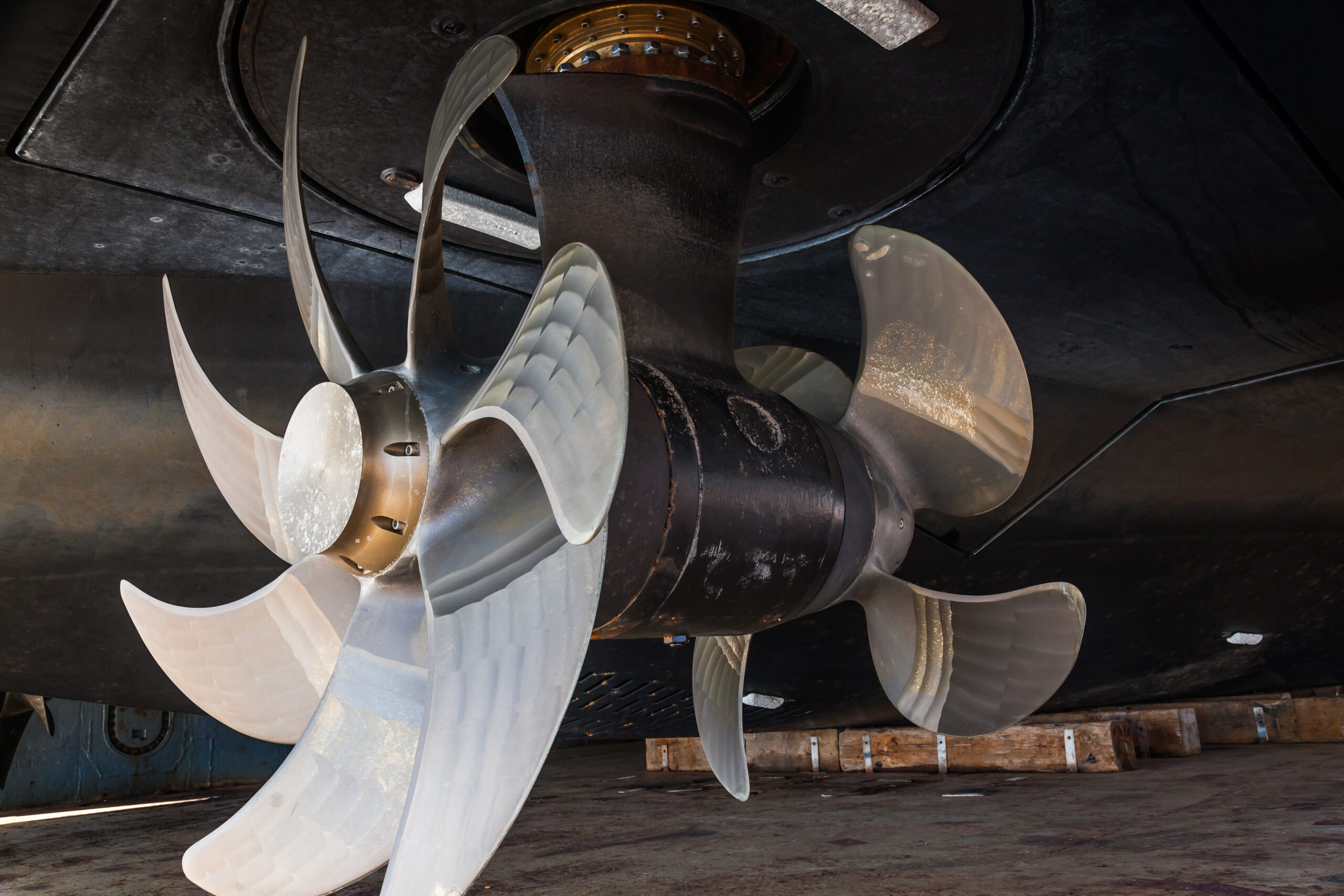
Dual-mode propellers, as propulsion and turbine devices, have found widespread application in renewable energy systems for marine vehicles, particularly in sailing boats and yachts. However, the existing dual-mode propellers in these contexts are typically chosen in an off-the-shelf manner, indicating a lack of hydrodynamic optimisation to enhance both the propulsion and energy generation efficiency in the same rotor. To address this limitation and furnish scientific validation of the design of a dual-mode propeller turbine rotor optimised to achieve a balanced performance in both propulsion and energy generation, rigorous experimentation was conducted using specialised software, Rotorysics 2019, and a case study vessel, the Princess Royale. Utilising prior experimental data for this propeller turbine, code validation was undertaken to ensure accurate prediction of the effects of the pitch, blade count and expanded area ratio on the performance in both modes. With the intention of achieving optimal power generation and propulsion efficiencies in conjunction with a single rotor, the findings reveal that the optimised fixed-pitch propeller exhibits dual functionality. They serve as both propulsion and tidal/current turbines with balanced efficiency. They are particularly suitable for low-speed vessels such as yachts anchored in currents or for sailboats utilising a propeller as a towed turbine. Through thorough testing and analysis, the concept of a dual-mode propeller turbine was feasible. Analysing them separately, in terms of the propulsion, the best geometry found through numerous tests of different expanded area ratios, blade number, pitch and speed was the 3-blade, 0.6 pitch ratio, which achieved a propulsive efficiency of 54.33% (0.5433204) and a power coefficient of 0.291843. Conversely, if the focus was on power generation while maintaining excellent propulsive efficiency, the optimal geometry would be the 5-blade, 0.6 pitch ratio, which offers a power coefficient of 0.348402 and a propulsive efficiency of 48.55% (0.48547). However, when using both power generation and propulsion as the criteria, the 5-blade, 0.6 pitch ratio, with an EAR of 0.387142, is superior, with balanced optimisation, offering a propulsive efficiency of 52.53% (0.52527) and a power coefficient of 0.319718. As expected, this encompasses a higher blade number for increased power generation efficiency and a higher pitch ratio for increased propulsive efficiency.”


Erriah, J.R., Liu, P. and Turkmen, S. (2024) ‘Hydrodynamic development and optimisation of a retrofittable dual-mode propeller turbine’, Energies, 17(13), p. 3138. doi:10.3390/en17133138.

The full report is accessible via: https://doi.org/10.3390/en17133138


For related publications please see Resources – UK National Clean Maritime Research Hub

Effect of pressure pores size on hydrodynamic and hydroacoustic marine propeller performances under cavitating case

“Abstract

The numerical work presented in the paper investigates the effect of pressure pores on hydrodynamic and hydroacoustic performances. This research aims to reduce cavitation area and underwater noise by mitigating the tip vortex cavitation. Compared to the few studies devoted to the pressure pores technique, several configurations based on the E779A marine propeller have been tested by considering different azimuthal and radial step values, a wider pore region concentrated at the top of the blade, and several pore diameter values. In addition, a numerical simulation was started to verify the effectiveness of the theoretical models in detecting the effect of pressure pores on the acoustic propagation generated by the propellers tested. The numerical approaches combining cavitating flow and noise propagation are performed using a hybrid method, which solves the Ffowcs Williams-Hawkings (FW–H) equation. A validation of the numerical simulation is carried out for cavitating and non-cavitating cases. Open water performances, cavitation area, sound pressure levels, and thrust distributions are analysed for two cavitation numbers. σ= 1,763 and σ= 1,029. The obtained results reveal that the cavitation area decreases as the pressure pore radius increases, but a slight reduction in propulsive efficiency accompanies this. Particularly for the pores radius of 0,00264D, propeller efficiency loss doesn’t exceed 2,6 % and 4,05 % for the two cavitation numbers investigated. Nevertheless, this configuration showed better acoustic performances with a diminution of 10 dB in overall sound pressure level compared to the propeller without pressure pores.”


Belhenniche, S.E. et al. (2024) ‘Effect of pressure pores size on hydrodynamic and hydroacoustic marine propeller performances under cavitating case’, Ocean Engineering, 307, p. 118164. doi:10.1016/j.oceaneng.2024.118164.

The full report is accessible via:https://doi.org/10.1016/j.oceaneng.2024.118164

Performance evaluation of linear variable valve actuation for a linear engine generator

“Abstract

The Joule cycle Linear Engine Generator (LEG) is a promising power generation technology with the potential to achieve zero carbon emissions. However, the LEG expander valve actuation system presents unique challenges due to its lack of a traditional crankshaft, the need for swift valve lift and reversal, and variable lift. This paper presents a Linear Variable Valve Actuation (LVVA) system for a LEG prototype. The LVVA system is powered by voice coil motors. Rigorous experimental investigations were conducted to analyze crucial performance factors, including energy consumption, force balance, energy flow distribution, and the relationship between valve lift duration and energy consumption. The results show that the LVVA system can achieve the desired valve lift and timing, as well as very small variations in LEG performance compared to the model using an ideal lift curve. The LVVA accounts for approximately 3.59 % of the LEG power output. The energy consumption of 1.607 J per valve stroke provides a slight advantage over traditional actuation systems. The obtained optimal lift curves were used to refine the LEG model. The influence of valve lift curves on LEG performance was evaluated which reveals rapid valve openings and relatively short duration contributing to improved LEG performance.”


Li M., Ngwaka U., Wu D., Wang Z., Korbekandi R.M., Baker N., Tsolakis A. Performance evaluation of linear variable valve actuation for a linear engine generator (2024) Energy, 298, art. no. 131361. DOI: 10.1016/j.energy.2024.131361

The full report is accessible via: https://doi.org/10.1016/j.energy.2024.131361

Research and innovation identified to decarbonise the maritime sector

“Abstract

The maritime sector requires technically, environmentally, socially, and economically informed pathways to decarbonise and eliminate all emissions harmful to the environment and health. This is extremely challenging and complex, and a wide range of technologies and solutions are currently being explored. However, it is important to assess the state-of-the-art and identify further research and innovation required to accelerate decarbonisation. The UK National Clean Maritime Research Hub have identified key priority areas to drive this process, with particular focus on marine fuels, power and propulsion, vessel efficiency, port operations and infrastructure, digitalisation, finance, regulation, and policy.”


Ling-Chin J, Simpson R, Cairns A, Wu D, Xie Y, Song D, Kashkarov S, Molkov V, Moutzouris I, Wright L, Tricoli P, Dansoh C, Panesar A, Chong K, Liu P, Roy D, Wang Y, Smallbone A, Roskilly AP. Research and innovation identified to decarbonise the maritime sector. Green Energy Sustain. 2024;4(1):0001. https://doi.org/10.47248/ges2404010001

The full publication is available via: https://doi.org/10.47248/ges2404010001