Cryogenic energy assisted power generation utilizing low flammability refrigerants

“Abstract

Cryogenic carbon-neutral fuels are potential alternatives as future marine fuels, releasing waste cryogenic energy during regasification and waste thermal energy during combustion. Organic Rankine Cycles (ORCs), using flammable hydrocarbon working fluids, are the preferred waste energy reutilization technology, prioritized over Brayton and Kaline cycles due to their compact system configuration. However, hydrocarbon flammability and explosiveness poses a huge safety risk. Therein lies the novelty of this study which presents an advanced dynamic model of a cryogenic enhanced ORC utilizing low flammability hydrofluorocarbons as working fluids for simultaneous reutilization of waste thermal and cryogenic energy from carbon-neutral cryogenic fuels. The evaporation temperature exhibits a direct correlation with energy and an inverse correlation with the exergy performance. System overcharging leads to a drastic performance decline, while undercharging can be tolerated to a certain liquid-to-volume ratio until critical failure. Marine classification societies’ recommendations-based scenarios were employed to gauge the emission reduction potential of low flammability working fluids for cryogenic ORCs, pitted against traditional combustion technologies. A maximum specific net-work, thermal efficiency, exergy efficiency, and cryogenic energy efficiency of 45.64 kJ/kg, 10.43 %, 12.75 %, and 11.8 % was achieved, respectively, with 85 % reduction in GHG emissions, using R452B as the working fluid.”
Farrukh S., Wu D., Taskin A., Dearn K. Cryogenic energy assisted power generation utilizing low flammability refrigerants (2024) Energy, 307, art. no. 132770. DOI: 10.1016/j.energy.2024.132770

The full report is accessible via:https://doi.org/10.1016/j.energy.2024.132770

Modelling and analyzing the stacking strategies in automated container terminals

“Abstract

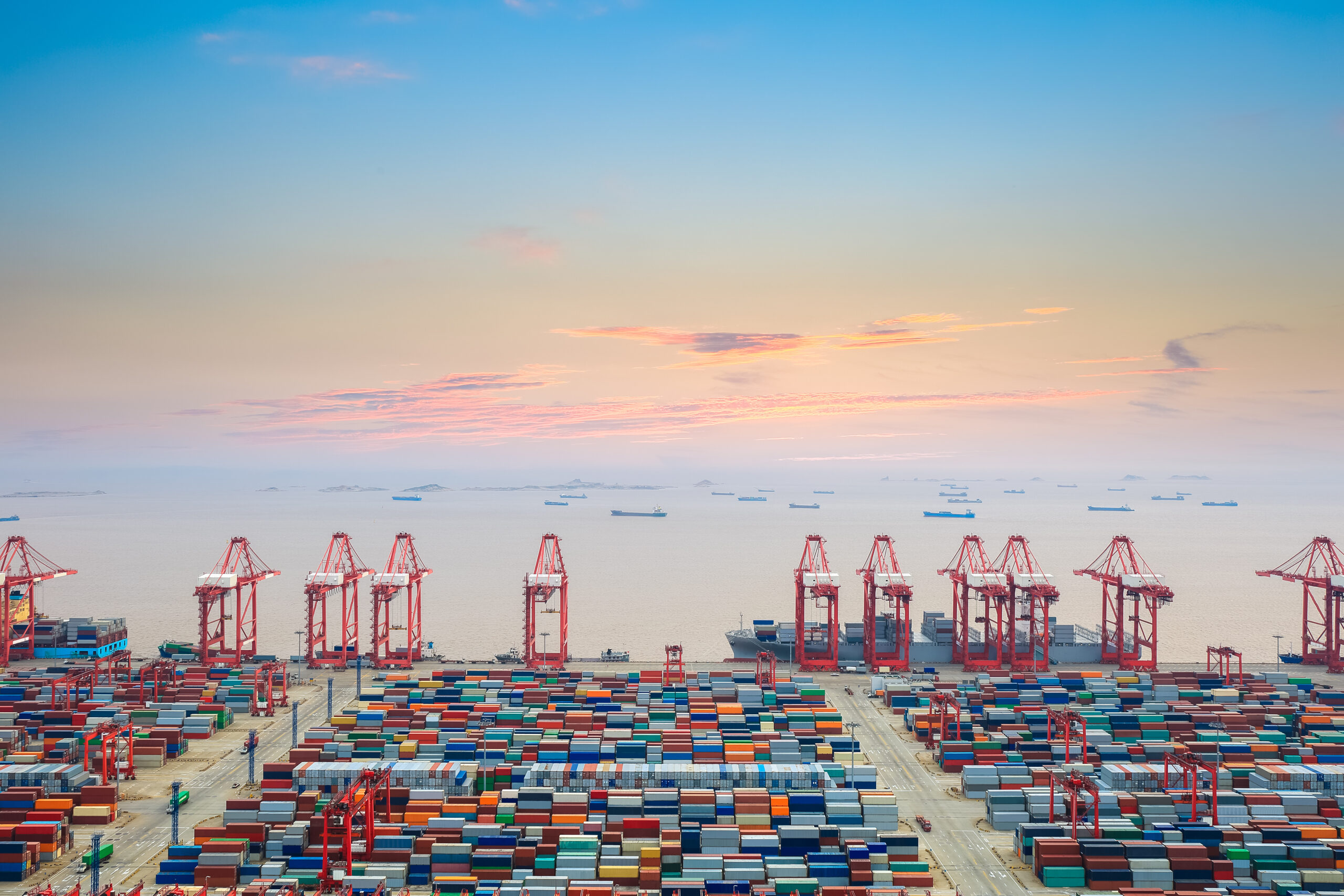
Stacking strategies determine which yard block to allocate the container and which bay and column in the block to stack the container. They play an important role to ensure yard efficiency and reduce vessel berthing time and truck waiting time. This paper models and analyses the impact of stacking strategies on the container terminal operations by a two-stage approach. We consider common stacking rules including random stacking rule and distance-based priority assigning rule. In the first stage, the individual operations of handling equipment are modelled by travel time models considering uncertainty in operations. The effects of stacking rules on individual operations, such as Automatic Guided Vehicle (AGV) traveling times, landside yard crane operation times and seaside yard crane operation times, are estimated. In the second stage, we use a semi-open queuing network to model the interactions between individual operations, and the results of the first stage are used as inputs in the second stage network. We analytically examined the handling times of the relevant equipment under different stacking strategies and their sensitivity to yard density. Finally, we use simulation method to verify the effectiveness of the results of our model. The results can offer insights into which stacking strategies are more suitable under different criteria and circumstances such as balancing workload, increasing yard utilization and reducing congestion for external trucks.”

Zhang, X., Jia, N., Song, DP., & Liu, B. (2024). Modelling and analyzing the stacking strategies in automated container terminals. Transportation Research Part E: Logistics and Transportation Review, 187, 103608. DOI: 10.1016/j.tre.2024.103608

Please use the DOI link above to access the full report.

For related publications please see Resources – UK National Clean Maritime Research Hub

Research and innovation identified to decarbonise the maritime sector

“Abstract

The maritime sector requires technically, environmentally, socially, and economically informed pathways to decarbonise and eliminate all emissions harmful to the environment and health. This is extremely challenging and complex, and a wide range of technologies and solutions are currently being explored. However, it is important to assess the state-of-the-art and identify further research and innovation required to accelerate decarbonisation. The UK National Clean Maritime Research Hub have identified key priority areas to drive this process, with particular focus on marine fuels, power and propulsion, vessel efficiency, port operations and infrastructure, digitalisation, finance, regulation, and policy.”


Ling-Chin J, Simpson R, Cairns A, Wu D, Xie Y, Song D, Kashkarov S, Molkov V, Moutzouris I, Wright L, Tricoli P, Dansoh C, Panesar A, Chong K, Liu P, Roy D, Wang Y, Smallbone A, Roskilly AP. Research and innovation identified to decarbonise the maritime sector. Green Energy Sustain. 2024;4(1):0001. https://doi.org/10.47248/ges2404010001

The full publication is available via: https://doi.org/10.47248/ges2404010001 

Performance and Emission Optimisation of an Ammonia/Hydrogen Fuelled Linear Joule Engine Generator

“Abstract:

This paper presents a Linear Joule Engine Generator (LJEG) powered by ammonia and hydrogen co-combustion to tackle decarbonisation in the electrification of transport propulsion systems. A dynamic model of the LJEG, which integrates mechanics, thermodynamics, and electromagnetics sub-models, as well as detailed combustion chemistry analysis for emissions, is presented. The dynamic model is integrated and validated, and the LJEG performance is optimised for improved performance and reduced emissions. At optimal conditions, the engine could generate 1.96 kWe at a thermal efficiency of 34.3% and an electrical efficiency of 91%. It is found that the electromagnetic force of the linear alternator and heat addition from the external combustor and engine valve timing have the most significant influences on performance, whereas the piston stroke has a lesser impact. The impacts of hydrogen ratio, oxygen concentration, inlet pressure, and equivalence ratio of ammonia-air on nitric oxide (NO) formation and reduction are revealed using a detailed chemical kinetic analysis. Results indicated that rich combustion and elevated pressure are beneficial for NO reduction. The rate of production analysis indicates that the equivalence ratio significantly changes the relative contribution among the critical NO formation and reduction reaction pathways.”


Performance and Emission Optimisation of an Ammonia/Hydrogen Fuelled Linear Joule Engine Generator. G. Chen, U. Ngwaka, D. Wu, M. Li. Energies 17, 1490, 2024.

The full report is accessible via: https://doi.org/10.3390/en17061490

Pathways to Decarbonization of Deep-Sea Shipping: An Aframax Case Study

“Abstract

Deep-sea decarbonization remains an enigma as the world scrambles to reduce global emissions. This study looks at near-term decarbonization solutions for deep-sea shipping. Pathways are defined, which are appealing to ship owners and major world economies alike. The economic and environmental viability of several of the most advanced near-term technologies for deep-sea decarbonization are revealed. The environmental analysis suggests the necessity of new emission intensity metrics. The economic analysis indicates that the carbon tax could be a great motivator to invest in decarbonization technologies. Standalone decarbonization technologies can provide a maximum of 20% emissions reduction. Hence, to meet IMO 2050 targets of 50% emissions reduction, several solutions need to be utilized in tandem. This study reaches the conclusion that alternative fuels are the crucial step to achieve a net zero carbon economy, although bunkering, infrastructure, and economic hurdles need to be overcome for the widespread implementation of carbon-neutral fuels.”


Pathways to Decarbonization of Deep-Sea Shipping: An Aframax Case Study. S Farrukh, M Li, GD Kouris, D Wu, K Dearn, Z Yerasimou, P Diamantis, Energies 16, 7640. 2023.

The full report is accessible via: https://doi.org/10.3390/en16227640