Predicting out-terminals for imported containers at seaports using machine learning: Incorporating unstructured data and measuring operational costs due to misclassifications

“Abstract

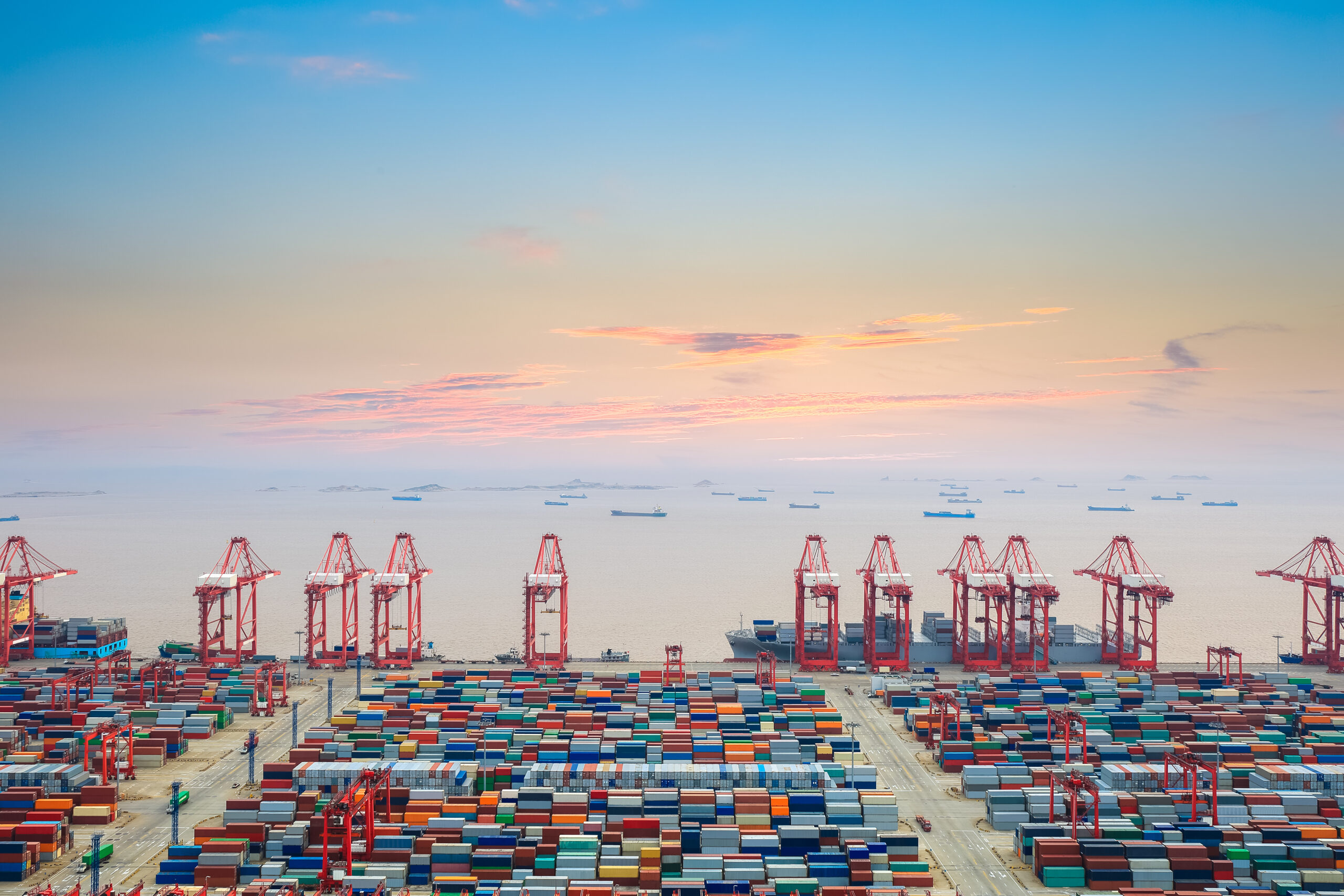
Persistent bottlenecks at container ports have significantly disrupted global supply chains, necessitating more efficient operations at seaports to address yard density and port congestion. An untapped but potentially critical approach to mitigating these challenges is to leverage container characteristics and machine learning to predict the out-terminals of containers upon their discharge from vessels. The predicted results can then guide the development of a more effective container storage strategy. To formulate such a strategy, this research developed a data-enabled methodological framework that integrates four key components: 1) Utilization of structured and unstructured data to enhance prediction accuracy. 2) Practice and knowledge-informed feature engineering to construct relevant features for the machine learning models. 3) Explanatory machine learning based classification models to understand the factors influencing terminal predictions. 4) Model-induced cost analysis to capture the monetary value of the prediction model including assessing the cost implications of misclassifications. An empirical study conducted at a seaport shows that our framework yields cost savings ranging from 14.90% to 30.45% compared to the Business-as-Usual scenario. Incorporating unstructured data as an additional feature in the machine learning models improves prediction performance by up to 6%. Moreover, integrating this framework into the existing operational system poses minimal risk and can be seamlessly executed. Additionally, the proposed methodological framework and its four components has broad applications beyond the shipping industry.”


Xie, Y., Song, DP, Dong, JX and Feng, YJ (2025). Predicting out-terminals for imported containers at seaports using machine learning: incorporating unstructured data and measuring operational costs due to misclassifications, Transportation Research Part E, (accepted in June 2025).
https://doi.org/10.1016/j.tre.2025.104331.

The full report is accessible via: https://doi.org/10.1016/j.tre.2025.104331


For related publications please see Resources – UK National Clean Maritime Research Hub

Performance of standard and self-venting conformable compressed hydrogen storage systems in fire tests and incident car fire

“Abstract

This study investigates the fire resistance rating (FRR) of a conformable compressed hydrogen storage system (cCHSS) in realistic under-vehicle fire scenarios. Using validated 3D CFD and physical models, the FRR was shown to depend strongly on the fire’s heat release rate per unit area (HRR/A). Bare cCHSS exposed to a typical spill fire (HRR/A = 1 MW/m2) ruptured in 2 min 54 s, which is 2∼4 times shorter than the 6–12 min typical of standard tanks. A presence of metal casing increased the FRR up to fourfold, but only by 54 s (∼23 %) when direct contact occurred between metal casing and tank wall. The performance of self-venting tanks with microleaks-no-burst (μLNB) technology was demonstrated. These explosion-free tanks eliminate the need for TPRDs, as microleaks were triggered before structural failure, with leakage times between 18.5 and 28.5 min. The results support using TPRD-less cCHSS to increase hydrogen vehicle fire safety.”


Kashkarov S, Makarov D, Molkov V. Performance of standard and self-venting conformable compressed hydrogen storage systems in fire tests and incident car fire. International Journal of Hydrogen Energy 2025;156:150407.

The full report is accessible via: https://doi.org/10.1016/j.ijhydene.2025.150407


For related publications please see Resources – UK National Clean Maritime Research Hub

Policy Bulletin 004: Scrubber investment and market prices

Maritime policy bulletin 004 covers scrubber investment and market prices.

The International Maritime Organisation (IMO) introduced in 2020 a regulation restricting sulphur shipping emissions to 0.5%. Rather than purchasing more expensive low sulphur fuels, a scrubber can be installed on ships to meet this regulation with conventional fuel. Scrubber installation is a shipping technology that has high capital expenditure but enhances profitability. This is due to fuel cost savings when operating the vessel or higher freight income when leasing it out. Volatile fuel prices and freight rates mean that making such investment decisions is challenging.

This bulletin is based on research by Dr. Yao Shi and Dr. Ioannis Moutzouris of City St. Georges, University of London.

To download the full policy bulletin, please click the download button above.

To read other bulletins, please see: Resources – UK National Clean Maritime Research Hub

Policy Bulletin 003: The economics of shipping decarbonisation

Maritime Policy Bulletin 003 explores the economics of shipping decarbonisation, offering financial insights into how effectively the maritime industry is aligning environmental objectives with economic performance.

Policy Bulletin 003 draws on the publication by Dr. Yao Shi and Dr. Ioannis Moutzouris of City St George’s, University of London, entitled “The economics of shipping decarbonisation: Carbon, production, and allocative efficiencies”.

This bulletin presents a summary of allocation efficiency across 14 vessel types. It highlights key findings on carbon efficiency and provides financial perspectives that inform actionable policy recommendations aimed at accelerating the adoption of greener fuels.

To download the full policy bulletin please click the download button above.

To explore other bulletins, visit:  Resources – UK National Clean Maritime Research Hub

Genetic algorithm-assisted multi-objective optimization for developing a Multi-Wiebe Combustion model in ammonia-diesel dual fuel engines

“Abstract

Direction Injection Dual-Fuel (DIDF) engines fueled with ammonia and diesel are identified as a promising solution for decarbonizing large-scale Compression Ignition (CI) engines. This study addresses the research gap of missing a parametric model for simulating the combustion process in DIDF CI engines using ammonia and diesel. Multi-objective optimization and genetic algorithms are applied to generate a parametric Multi-Wiebe Combustion (MWC) model based on experimental results from a NH3-diesel DIDF CI engine. The innovative approach supports one-dimensional engine modeling with NH3-diesel combustion in GT-Power, enhancing the understanding of direct injection timings, fuel interactions, and combustion dynamics. Key findings include the impact of dual-fuel injection timings and fuel ratios on ignition delay, individual combustion phase durations, and heat release rate, providing a quantitative description of combustion behavior under varying conditions. The validation results show that with injection timing variations from −17.5 to −10 CAD aTDC and NH3 energy ratios ranging from 40 % to 60 %, relative errors remain below 5 % for key performance indicators such as pressure and efficiency. This study proposes a methodology to generate an accurate combustion model – the MWC model – for one-dimensional dual-fuel engine simulation, aiding in calibrating scaled-up DIDF CI engines and guiding further engine designs.”


Zhang, Y., Wu, D., Nadimi, E., Tsolakis, A., Przybyla, G. and Adamczyk, W. (2025). Genetic algorithm-assisted multi-objective optimization for developing a Multi-Wiebe Combustion model in ammonia-diesel dual fuel engines. Energy, [online] 325, p.136181. doi:https://doi.org/10.1016/j.energy.2025.136181.

The full report is accessible via: https://doi.org/10.1016/j.energy.2025.136181

For related publications, please see Resources – UK National Clean Maritime Research Hub

Stability of non-premixed turbulent methane flames: Numerical simulations of the critical diameter and flame stability limits

“Abstract

A Computational Fluid Dynamics (CFD) model is developed and validated against experimental data to predict the critical diameter and stability limits of non-premixed turbulent methane flames. The critical diameter defines the orifice size beyond which a stable flame persists at all driving pressures and below this pressure stability is pressure-dependent. Flame stability follows a “peninsula” curve of pressure versus release diameter, with sustained flames above the upper and below the lower pressure limits, while the intermediate region represents a blow-out zone where combustion is not sustained. The critical diameter, at the curve’s rightmost point, is crucial for predicting sustained flames. Methane releases have been simulated for conditions in the region of the critical diameter, and for diameters and pressures ranging from 15 to 45 mm and 0.01 to 20 MPa, respectively, corresponding to the upper and lower flame stability limits using the realizable k − ε model and EDC combustion model. The simulations accurately captured blow-out and sustained flames, yielding a critical diameter of 42 mm, consistent with experiments. A methane flame at 5.88 MPa gauge through a 50 mm orifice was also simulated, showing flame length and lift-off distance in agreement with experimental observations. These results confirm the model’s reliability in predicting methane flame stability, providing valuable insights for safety and combustion applications. This study presents the first CFD-based reproduction of the full methane flame stability curve, validating model reliability across a wide pressure range and providing a predictive tool for future applications, including the assessment of flame stability in methane‑hydrogen mixtures.”


Kazemi, M., Brennan, S. and Vladimir Molkov (2025). Stability of non-premixed turbulent methane flames: Numerical simulations of the critical diameter and flame stability limits. Fuel Processing Technology, 275, pp.108249–108249. doi:https://doi.org/10.1016/j.fuproc.2025.108249.

The full report is accessible via: https://doi.org/10.1016/j.fuproc.2025.108249


For related publications please see Resources – UK National Clean Maritime Research Hub

LES of atmospheric dispersion of ammonia from storage tank ullage space under real meandering wind currents in 800 m domain

“Abstract

This study aims to develop and validate a CFD model for large eddy simulations of gaseous ammonia released from the ullage space of a storage tank through the piping system to the atmosphere under realistic wind conditions measured experimentally. The simulations are validated against Test No.1 conducted by INERIS (Bouet et al., 2005) of 460 s release duration with ammonia concentration decay measured up to 800 m downwind of the release nozzle. The computational domain was designed to represent a large-scale atmospheric dispersion scenario in conditions of meandering wind currents. The atmospheric turbulence is simulated by incorporating real-time meteorological data on wind direction and speed oscillations. The proposed methodology accounts for meandering wind currents. This methodology, combined with sub-grid scale Smagorinsky-Lilly turbulence modelling, enables accurate simulations of ammonia dispersion observed in the experiment. The simulations reproduced measured in the near-field (20 m from the release nozzle) transient ammonia concentration with high accuracy. The simulations also accurately captured the average concentration decay up to 800 m downwind of the release location. The hazard distance defined by the flammability of the ammonia-air mixture is estimated as 13.2 m from the release. The maximum toxicity cloud envelope extends to 205 m downwind, 9.5 m vertically, and 21.3 m laterally for the fatality threshold and increasing to 837 m, 18 m, and 53 m, respectively, for the injury limit. The study highlights the importance of proper modelling and simulations of real wind meandering currents for predicting realistic hazard distances.”


Srinivas Sivaraman, Dmitriy Makarov, Benjamin Truchot, Vladimir Molkov, LES of atmospheric dispersion of ammonia from storage tank ullage space under real meandering wind currents in 800 m domain, Journal of Hazardous Materials, Volume 494, 2025,138712,

The full report is accessible via: https://doi.org/10.1016/j.jhazmat.2025.138712


For related publications please see Resources – UK National Clean Maritime Research Hub

Techno-economic assessment of a fuel flexible free piston engine generator based energy system for cold ironing application

“Abstract

This study assesses the techno-economic viability of a fuel-flexible free piston engine generator (FPEG) for providing shore power to maritime vessels (cold ironing) within ports. In cold ironing applications a localised power generation is required when there is limited electrical supply within the port. The FPEG offers an advantage over conventional engines by eliminating rotational components, with linear piston reciprocation leading to a compact and efficient conversion of fuel to electrical power. The FPEGs enable the engine to run on various fuels, including future options like hydrogen, ammonia, and methanol. The sizing of the FPEG is matched to the power requirements of different classes of vessel. Underpinning the techno-economic model is an FPEG model which is validated against experimental data. The results show that hydrogen fuel is the most efficient, with 41.08 % efficiency and the lowest fuel consumption compared to ammonia and methanol. Lower hydrogen consumption results in less NOx, despite its higher emission factor per mass of fuel burned. Green hydrogen however has the highest levelised cost, of the fuels investigated, at 0.40 £/kWh, with methanol being the cheapest at 0.18 £/kWh. The study calculates the greenhouse gas potential of the different fuels, highlighting the advantage of green hydrogen with calculated emissions to be 0.01 kgCO2-e/kWh, significantly lower than ammonia at 0.086 kgCO2-e/kWh and methanol at 0.635 kgCO2-e/kWh. Overall, this study shows the FPEG as a viable option for cold ironing applications, offering notable advantages over other generator types, such as fuel flexibility and compact design.”


Roy D, Ngwaka U, Shivaprasad KV, Zhu S, Taghavifar H, Williams R, Smallbone A, Roskilly AP. Techno-economic assessment of a fuel flexible free piston engine generator-based energy system for cold ironing application. Energy. 2025 Jun 3:136954.

The full report is accessible via: https://doi.org/10.1016/j.energy.2025.136954


For related publications please see Resources – UK National Clean Maritime Research Hub

The multi-peaks structure of the blast wave generated by a liquid hydrogen storage tank BLEVE

“Abstract

Blast wave structure of boiling liquid expanding vapour explosions (BLEVE) for liquid hydrogen (LH2) storage is not fully understood. There is a lack of experimental and numerical studies on underlying physical phenomena. This study develops a CFD model able to simulate multiple pressure peaks of the blast wave accounting for both the effect of combustion on the strength of blast wave generated by the compressed gaseous hydrogen (CGH2) in ullage space, and the slower process of flashing boiling of the liquid phase resulted from pressure drop. The simulations reproduced the measured overpressures and multi-peak structure of blast wave observed in the BLEVE tests performed by BMW. It is confirmed that the larger first pressure peak is produced by the CGH2 shock fed by combustion. The flash boiling of LH2 during pressure drop produces a series of follow-up pressure waves. Combustion contribution to the entire blast wave dynamics is demonstrated.”


D. Cirrone, D. Makarov, V. Molkov, The multi-peaks structure of the blast wave generated by a liquid hydrogen storage tank BLEVE. International Journal of Hydrogen Energy 2025;133:416-430.

The full report is accessible via: https://doi.org/10.1016/j.ijhydene.2024.10.392


For related publications please see Resources – UK National Clean Maritime Research Hub

Modelling and numerical simulations of heat and mass transfer in multiphase flow during the release of liquid ammonia from a storage tank through the piping system to the open atmosphere

“Abstract

The aim of this study is to develop a contemporary CFD model of the multiphase flow of ammonia from a bulk liquid part of the storage vessel through the release piping to the atmosphere. The model is validated against the experiment with a 12 m3 tank pressurised to 0.5357 MPa(g), i.e. Test No.4 of 560 s duration conducted by INERIS with release from the liquid bulk. The volume-of-fluid (VOF) method is applied for shared velocity and temperature of liquid and vapour phases of ammonia. The heat and mass transfer between liquid and vapour is simulated by modified Lee’s evaporation-condensation model, accounting for the heat transfer from/to equipment and environment. A unique feature of the model is the phase change mechanism with varying mass transfer rates based on the transient volume fractions of liquid and vapour in a multiphase flow. This allowed to account for computationally unaffordable simulations of changing in time contact surface area between dispersed liquid and gaseous phases and avoid associated numerical complications. The model effectively captures the complex heat and mass transfer phenomena, including the cooling effect of evaporation in the piping and at the nozzle. The value of the time relaxation parameter and a multiplier accounting for the increase of contact surface between liquid and vapour in the pipe flow are defined by the inverse problem method through the comparison of simulations with the experiment. Simulations accurately reproduced experimental pressure and temperature dynamics in the storage tank, piping system and nozzle, and the total released mass of ammonia of 2352 kg.”


Vladimir Molkov, Srinivas Sivaraman, Donatella Cirrone, Benjamin Truchot, Dmitriy Makarov, Modelling and numerical simulations of heat and mass transfer in multiphase flow during the release of liquid ammonia from a storage tank through the piping system to the open atmosphere, International Journal of Heat and Mass Transfer, Volume 246, 2025, 127097, https://doi.org/10.1016/j.ijheatmasstransfer.2025.127097.

The full report is accessible via: https://doi.org/10.1016/j.ijheatmasstransfer.2025.127097


For related publications please see Resources – UK National Clean Maritime Research Hub