Policy Bulletin 011: Smarter Scheduling in Yards for Cleaner Ports
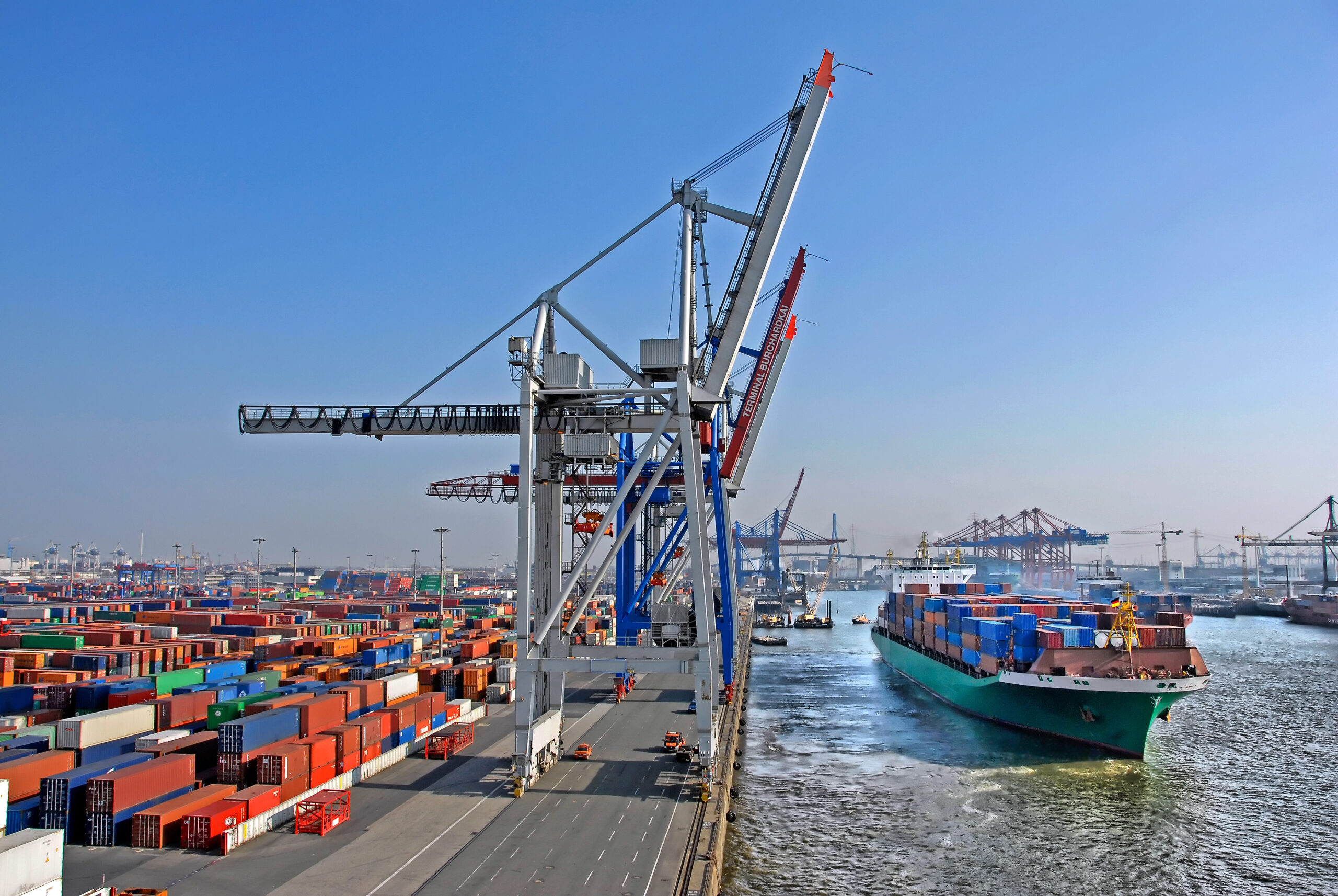
Ports are electrifying yard equipment to reduce greenhouse gas emissions, but full electrification takes years due to investment costs and grid supply capacity. During this transition, ports operate mixed fleets of diesel, hybrid, and electric yard cranes. Managing these cranes efficiently is essential for reducing energy use and costs, emissions, and congestion. This research outlines how improvements in modelling algorithms can optimise crane scheduling during phased upgrades to lower both emissions and costs.
Key findings:
- Cable length affects efficiency and safety risks and is optimal at around 40 bay lengths
- Type of crane placement and how all cranes are configured in a yard affects emissions
- Adopting hybrid and cable‑powered cranes early are cost‑effective in the transition
- Effective truck time management can reduce congestion and reduce operating costs
- Carbon pricing can be built directly into scheduling decisions
Mixed‑fleet crane operations are expected to be common for many years. Smarter scheduling, using modelling solutions such as developed here, can help ports cut emissions, manage limited power, and maintain safe, efficient operations in the transition to fully electric yards.
Policy Recommendations:
There are some policy improvement suggestions relevant to both Department for Transport and Department for Energy Security and Net Zero as follows:
- Carbon pricing and other financial incentives can encourage crane‑upgrade decisions
- Safety‑distance standards are required for cabling of multi‑crane operations
- Support the use of smarter scheduling tools to handle mixed fleets and truck arrivals to save on costs, emissions and congestion
- For grid upgrades at ports prioritise where electric cranes are most constrained.
This Policy Bulletin is based on the research publication B. Liu, F. Wang, D. Sheng, X. Zhang, J. Zheng, and D. Song, ‘Scheduling heterogeneous yard cranes for port decarbonization: power constraints, crane interference, and safety distances’, Transp. Res. Part E Logist. Transp. Rev., vol. 206, p. 104581, Feb. 2026, https://doi.org/10.1016/j.tre.2025.104581
Recommended citation:
Song, D., & Copeland, C. L. (2026). Smarter Scheduling in Yards for Cleaner Ports. UK National Clean Maritime Research Hub. https://doi.org/10.5281/zenodo.23499059
To download the full policy bulletin, please click the download button above.
To read other bulletins, please see: Resources – UK National Clean Maritime Research Hub