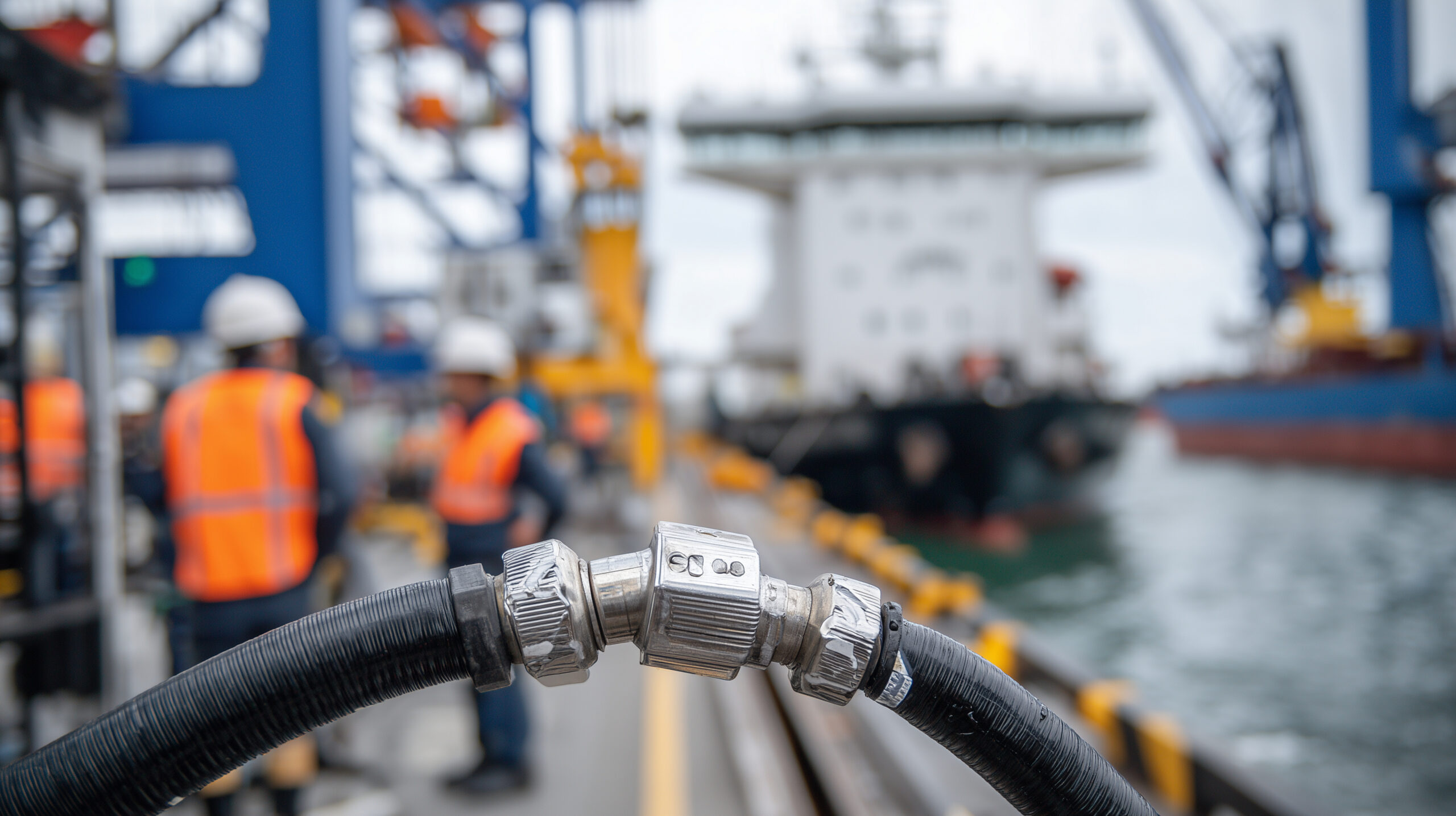
Design and techno-economic feasibility study of a hydrogen-powered integrated energy system for cold ironing application
“Abstract
The maritime sector contributes substantially to greenhouse gas emissions, with direct implications for climate change and air quality in port-adjacent communities. This study investigates a hydrogen-powered cold‑ironing system for a major international port under variable shore-side power demand. A semi-empirical model integrating a proton exchange membrane electrolyser, a proton exchange membrane fuel cell, hydrogen storage, and battery storage was developed. Techno-economic analysis and multi-objective optimisation were conducted to evaluate the proposed system configurations. Without heat recovery, the hydrogen storage and battery hybrid configurations achieved levelised costs of 0.5172 $/kWh and 0.4969 $/kWh, with exergy efficiencies of 46.44% and 47.43%, respectively. Under the upper-bound heat-recovery case, the corresponding levelised costs were 0.4498 $/kWh and 0.4488 $/kWh, with exergy efficiencies of 47.62% and 46.18%. The preferred configuration also achieves a discounted payback period of 8 years at a 7% discount rate, suggesting potential under the stated modelling assumptions. The results provide a system-level assessment of the proposed configurations under the adopted demand, cost and modelling assumptions.”
Taylor, O., Roy, D., Ling-Chin, J. and Roskilly, A.P. (2026). Design and techno-economic feasibility study of a hydrogen-powered integrated energy system for cold ironing application. Applied Thermal Engineering, 304, p.132646. doi:10.1016/j.applthermaleng.2026.132646.
The full article is accessible via:
https://doi.org/10.1016/j.applthermaleng.2026.132646
For related publications please see Resources – UK National Clean Maritime Research Hub