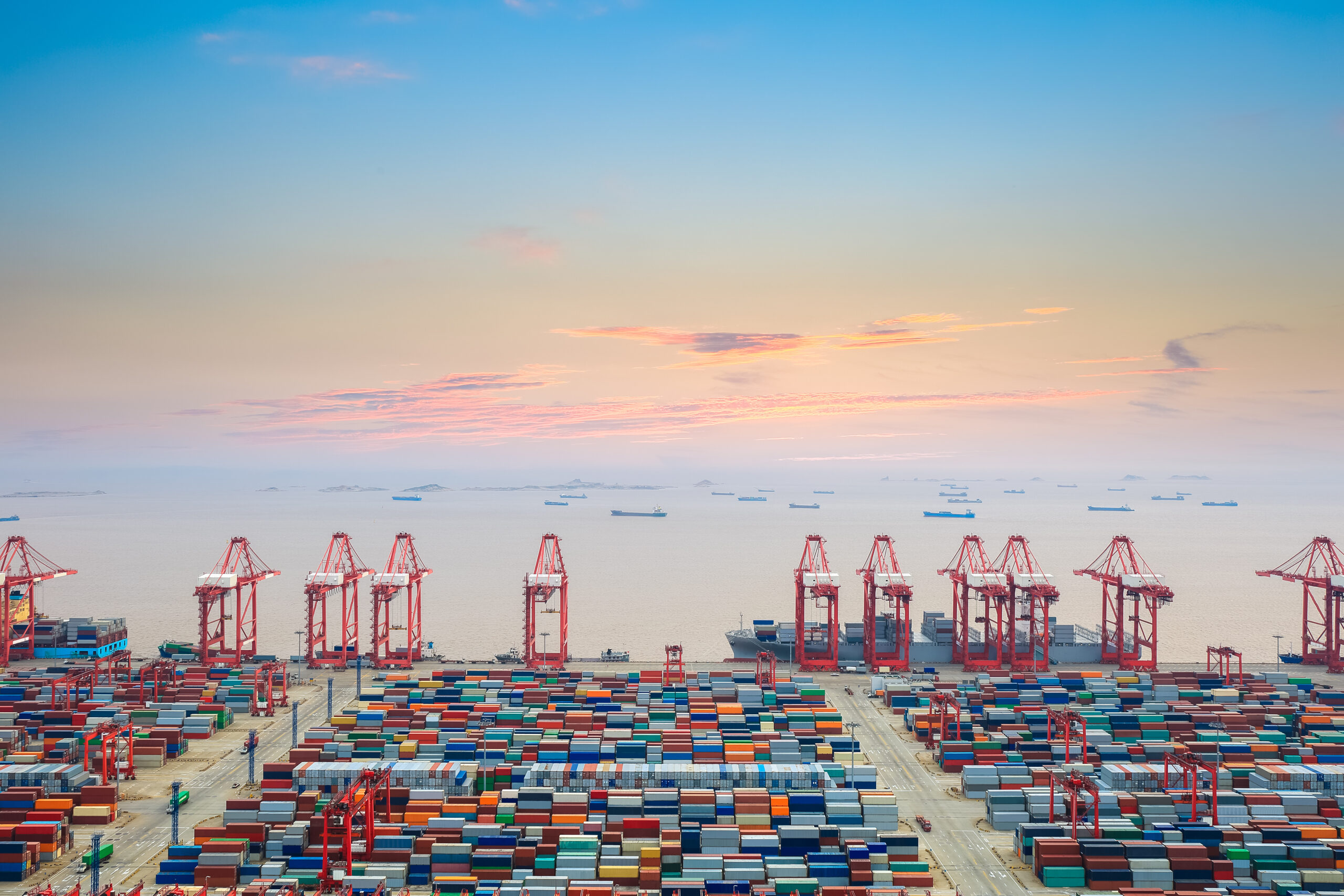
Modelling and analyzing the stacking strategies in automated container terminals
“Abstract
Stacking strategies determine which yard block to allocate the container and which bay and column in the block to stack the container. They play an important role to ensure yard efficiency and reduce vessel berthing time and truck waiting time. This paper models and analyses the impact of stacking strategies on the container terminal operations by a two-stage approach. We consider common stacking rules including random stacking rule and distance-based priority assigning rule. In the first stage, the individual operations of handling equipment are modelled by travel time models considering uncertainty in operations. The effects of stacking rules on individual operations, such as Automatic Guided Vehicle (AGV) traveling times, landside yard crane operation times and seaside yard crane operation times, are estimated. In the second stage, we use a semi-open queuing network to model the interactions between individual operations, and the results of the first stage are used as inputs in the second stage network. We analytically examined the handling times of the relevant equipment under different stacking strategies and their sensitivity to yard density. Finally, we use simulation method to verify the effectiveness of the results of our model. The results can offer insights into which stacking strategies are more suitable under different criteria and circumstances such as balancing workload, increasing yard utilization and reducing congestion for external trucks.”
Zhang, X., Jia, N., Song, DP., & Liu, B. (2024). Modelling and analyzing the stacking strategies in automated container terminals. Transportation Research Part E: Logistics and Transportation Review, 187, 103608. DOI: 10.1016/j.tre.2024.103608
Please use the DOI link above to access the full report.
For related publications please see Resources – UK National Clean Maritime Research Hub